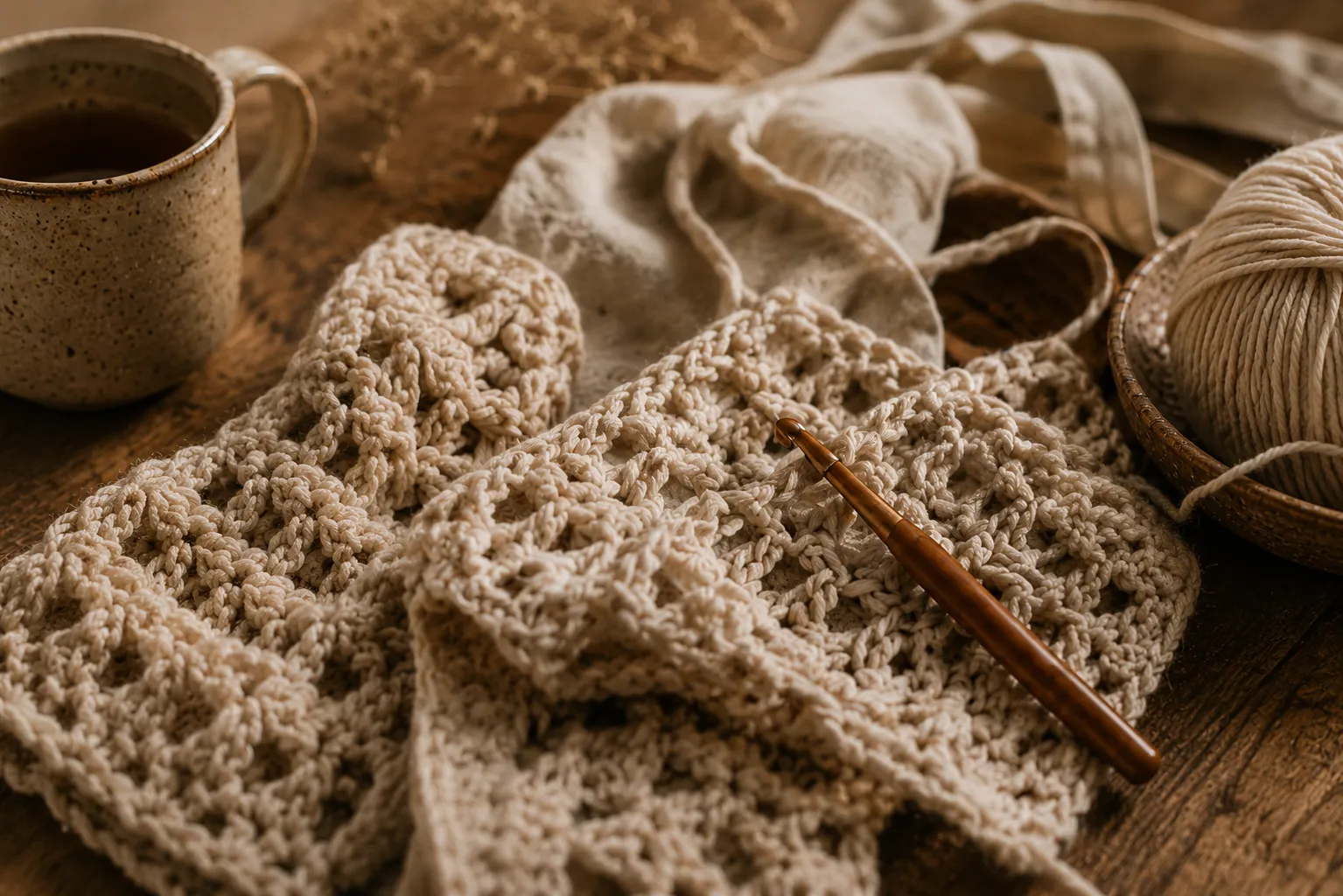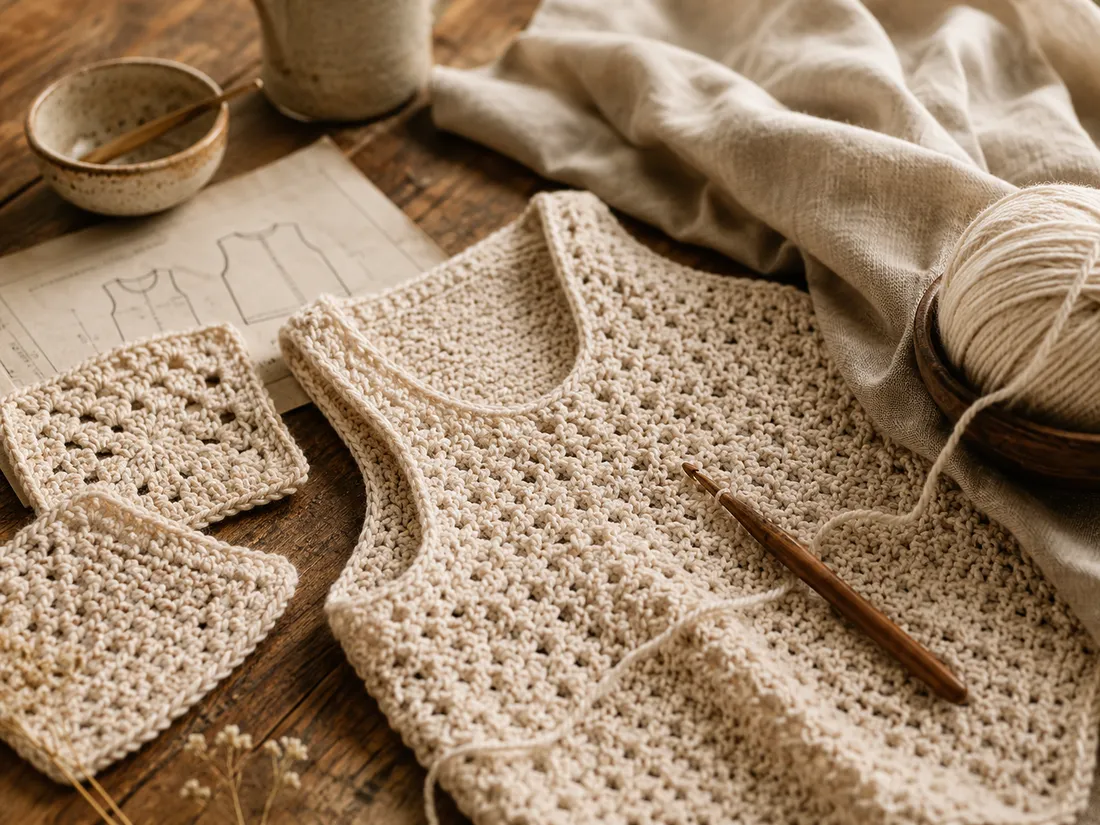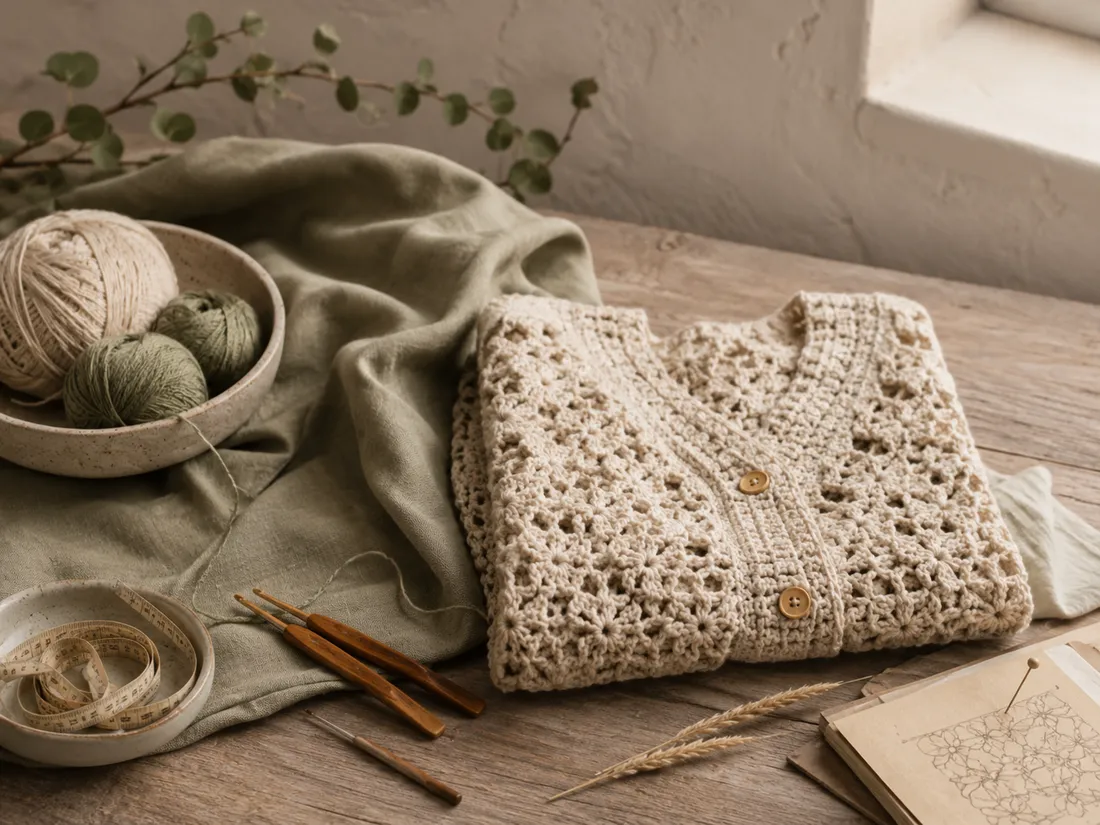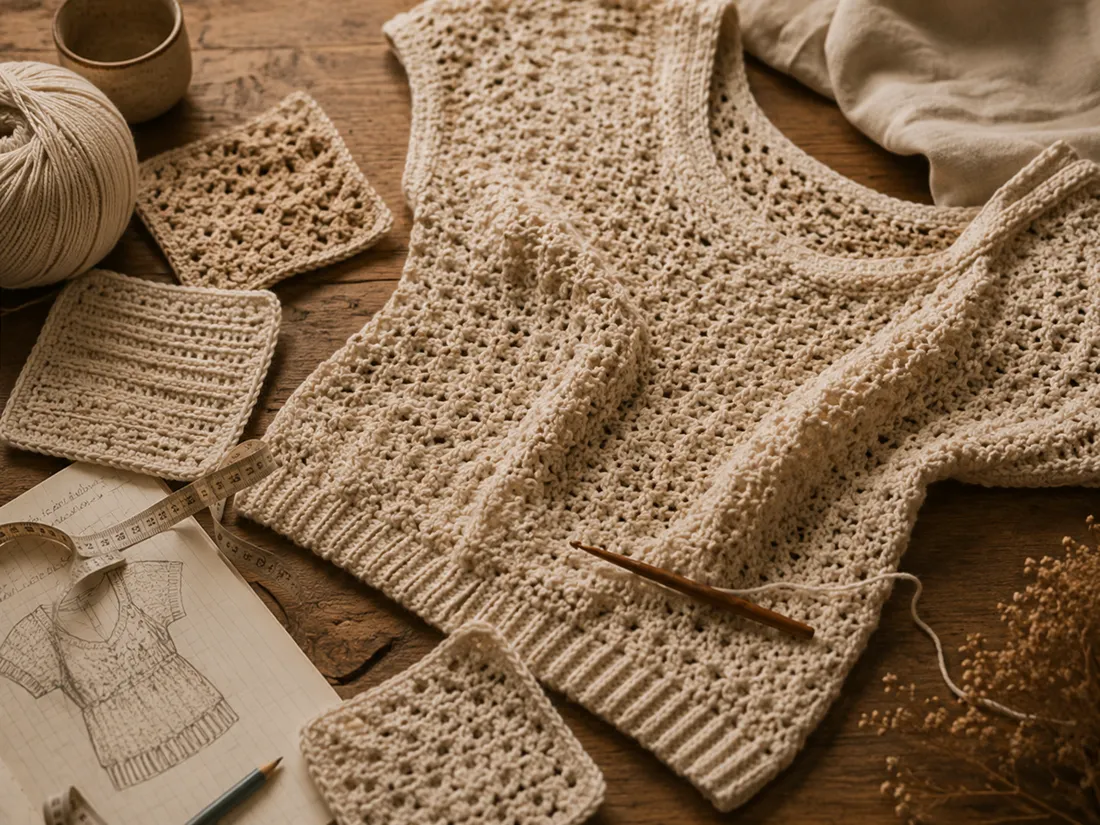
A bobble stitch is 5 double crochets worked into the same stitch and closed together with a single pull-through, forming a neat raised bump on the fabric. It sounds more complicated than it is — bobble stitch uses only double crochet and one closing pull-through. Most beginners master it within 10–15 minutes of practice.
What is bobble stitch in crochet?
A bobble is a raised 3D cluster formed by working multiple incomplete double crochets into the same stitch, then closing them all with one final pull-through. The result is a small popcorn-like bump that sits proud of the surrounding fabric.
Most patterns use a 5-double-crochet bobble (5-dc bobble), which is what we cover here. Some patterns use 4 or 6 double crochets — the principle is identical, just adjust the repeat count. The standard abbreviation in patterns is MB (make bobble).
Bobbles always form on the wrong side (WS) of the work as you crochet them, but pop to the right side (RS) when you turn. This is normal — push each bobble through to the RS with your finger as you go.
How to make a bobble stitch — step by step
You need: yarn, a hook 0.5mm larger than the yarn’s recommended size, scissors.
To make one 5-dc bobble (MB):
- Yarn over, insert hook into the stitch
- Yarn over, pull up a loop — you now have 3 loops on hook
- Yarn over, pull through 2 loops only — 2 loops remain on hook
- Repeat steps 1–3 four more times into the same stitch — you end with 6 loops on hook
- Yarn over once, pull through all 6 loops — the bobble closes and pops to the front
Chain 1 after the bobble to lock it in place (most patterns include this automatically).
Basic bobble stitch pattern:
- Foundation chain: any even number
- Row 1: dc in each ch across, turn
- Row 2 (bobble row): ch 3, *dc in next st, MB in next st*, repeat to last st, dc in last, turn
- Row 3: ch 3, dc in each st across, turn
- Repeat rows 2–3
Work a 10-stitch, 6-row swatch before starting any project — it takes 10 minutes and your first few bobbles will always be uneven.
Common bobble stitch mistakes
Flat bobbles are the most frequent problem. The cause is almost always tension — pulling the final yarn-through too tight collapses the cluster before it can pop. Fix: consciously leave the working loops slightly loose as you build the bobble, and pull the final closing loop through at a relaxed tension.
Bobbles in the wrong place happen when you accidentally work into adjacent stitches rather than the same stitch. All 5 double crochets must go into a single stitch. Count carefully on your first few rows.
Gaps around the bobble usually mean you skipped the chain-1 after closing. Some patterns omit it but most beginners need it to keep the fabric even.
Twisted loops on the hook occur when you wrap the yarn inconsistently. Make sure each yarn-over wraps in the same direction — anticlockwise from the front of the hook.
Bobble stitch variations worth knowing
The standard 5-dc bobble is the workhorse, but you’ll encounter variations in patterns:
3-dc bobble — smaller and less raised. Good for fine yarn or when you want subtle texture without bulk. Works in 4-ply and DK weight where a 5-dc bobble would feel heavy.
7-dc bobble — very pronounced, almost spherical. Best in chunky yarn for maximum impact. Makes excellent stitch work on bags and cushion covers where the bobble is the focal point.
Treble crochet bobble — uses treble crochets instead of doubles, producing a taller, more elongated cluster. Less common but striking in lacy or open-work patterns.
Best projects for bobble stitch
Bobble stitch works best in aran or DK weight yarn where the clusters have room to pop. Chunky yarn makes large dramatic bobbles; 4-ply makes the stitch hard to see.
Cushion covers are the classic first project. The flat back and bobbled front is a quick make and the stitch looks impressive from a distance. A 40cm cushion cover takes 3–4 hours in aran weight.
Market bags and totes hold their shape well in bobble fabric, and the dense texture adds structure without needing lining.
Baby blankets in a spaced bobble grid are a perennial favourite. Use a soft merino or cotton-blend and keep the bobble spacing wide (every 3rd stitch) so the fabric stays drapey rather than stiff.
Hat brims and ear bands — a single band of bobbles around the brim of a beanie adds texture without the weight of an all-bobble hat. A great way to practise the stitch before committing to a larger project.
Tips for neat, even bobbles
- Go up a hook size from the yarn’s recommendation — bobble fabric is naturally dense
- Work a tension swatch before every project; bobble rows use significantly more yarn than plain dc rows
- Block finished pieces — blocking evens out bobble placement and opens up the texture considerably
- For in-the-round projects, push each bobble to the RS immediately after closing it
- If bobbles are disappearing into the fabric, try a contrasting yarn for a test swatch to see them clearly
Bobble stitch is one of those techniques that looks far harder than it is. Once you understand that every bobble is just a stack of incomplete double crochets closed together, the stitch becomes second nature — and the textured fabric it produces is genuinely satisfying to work.