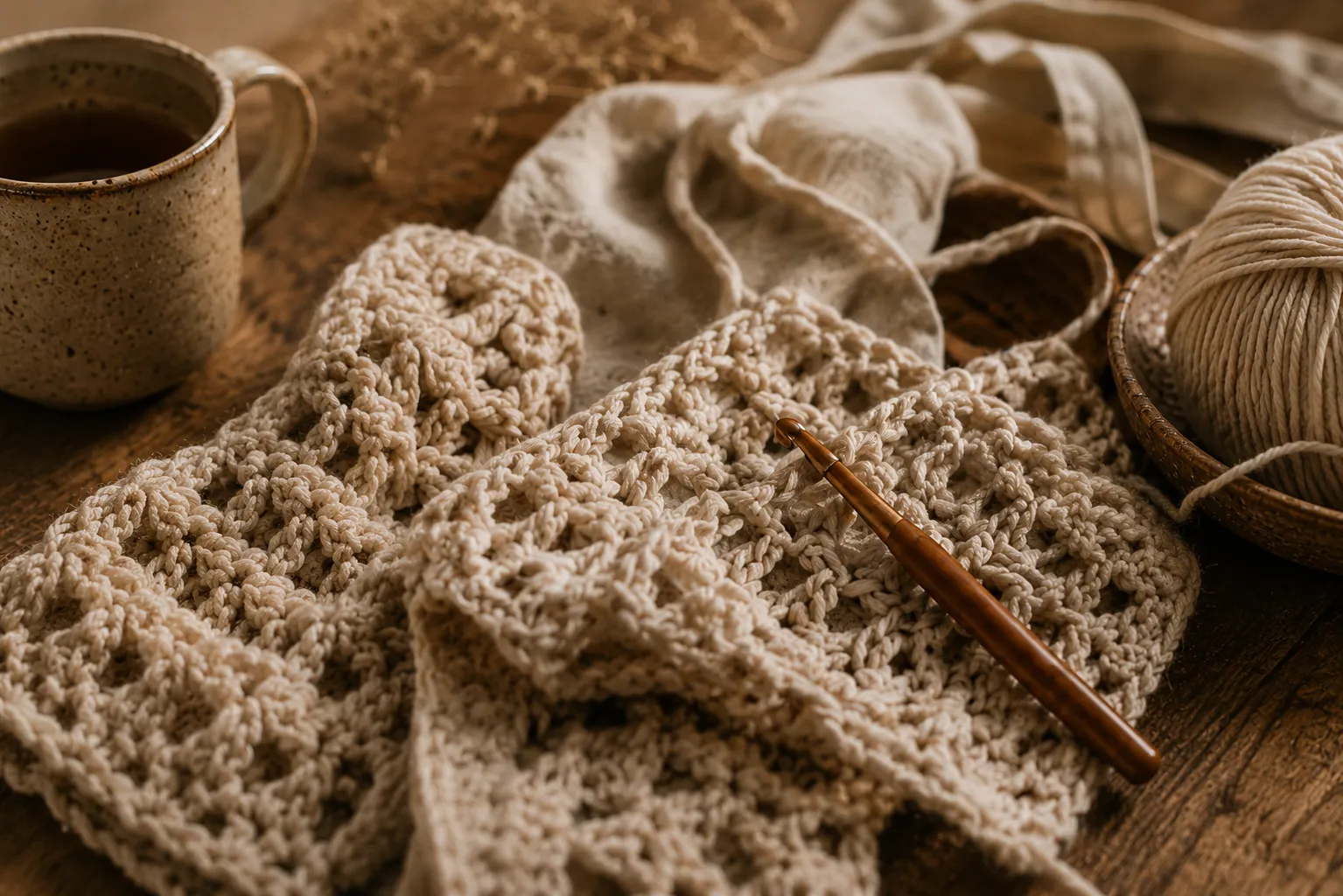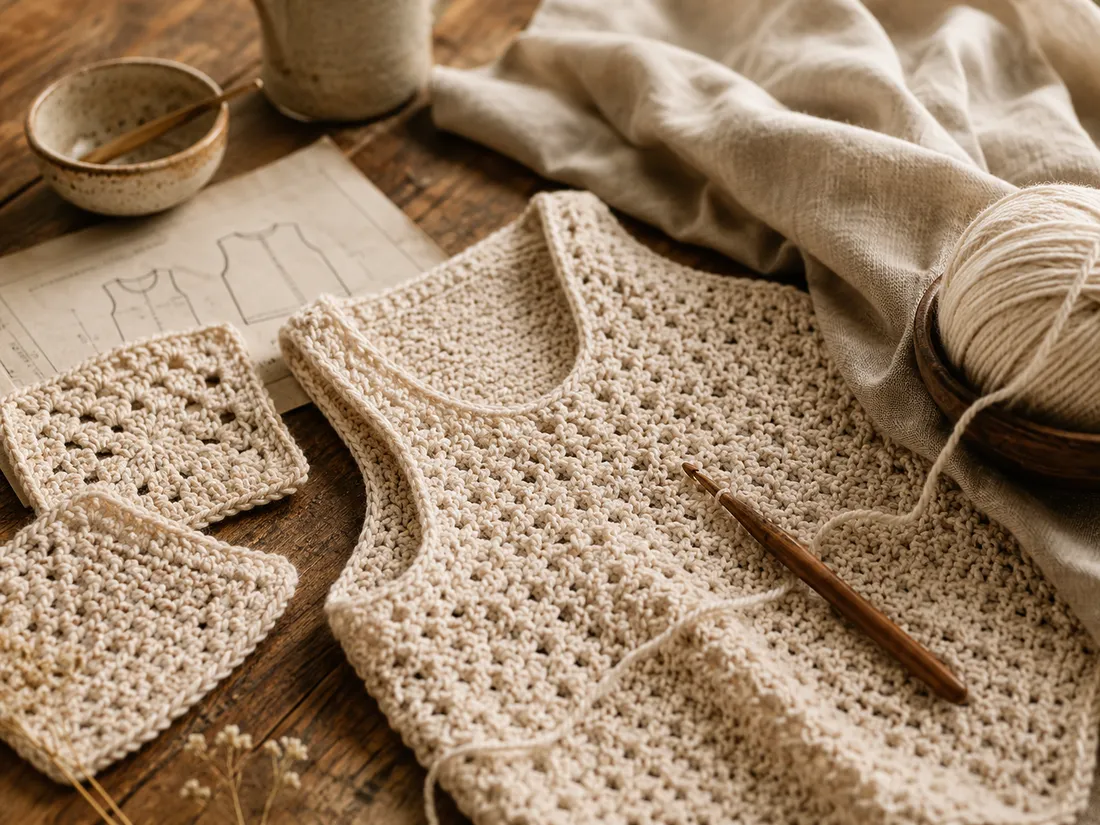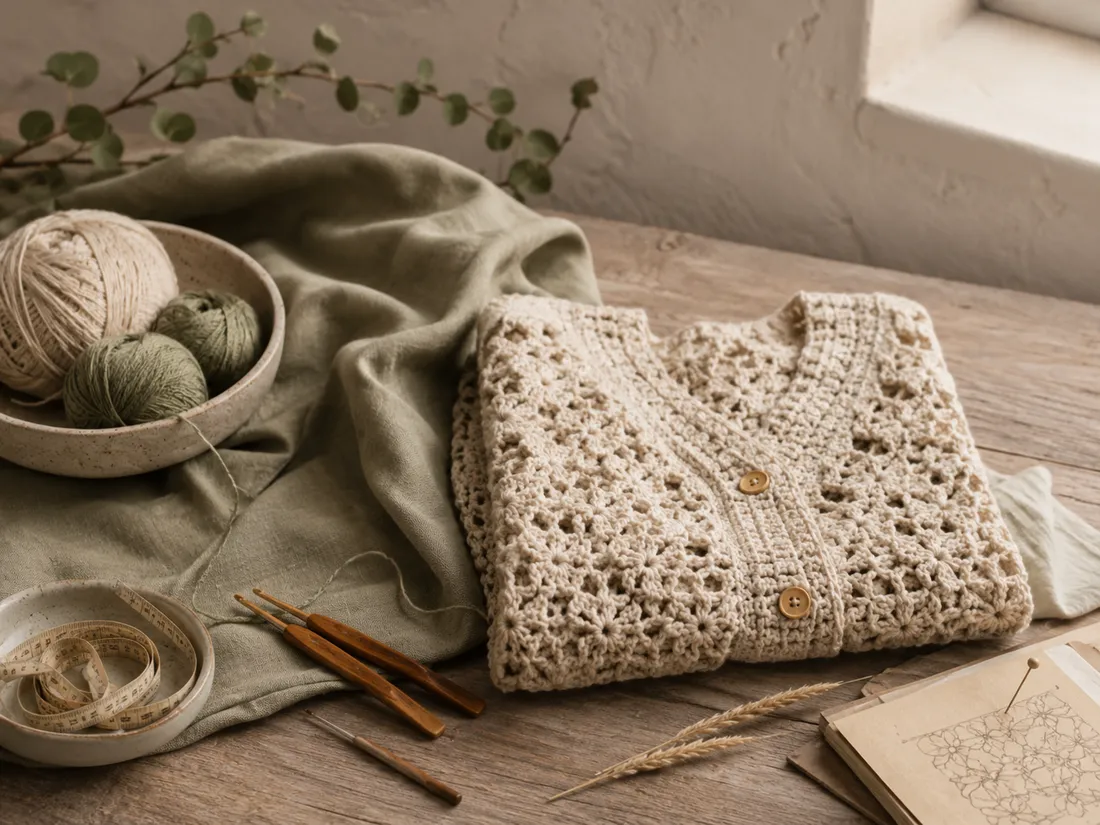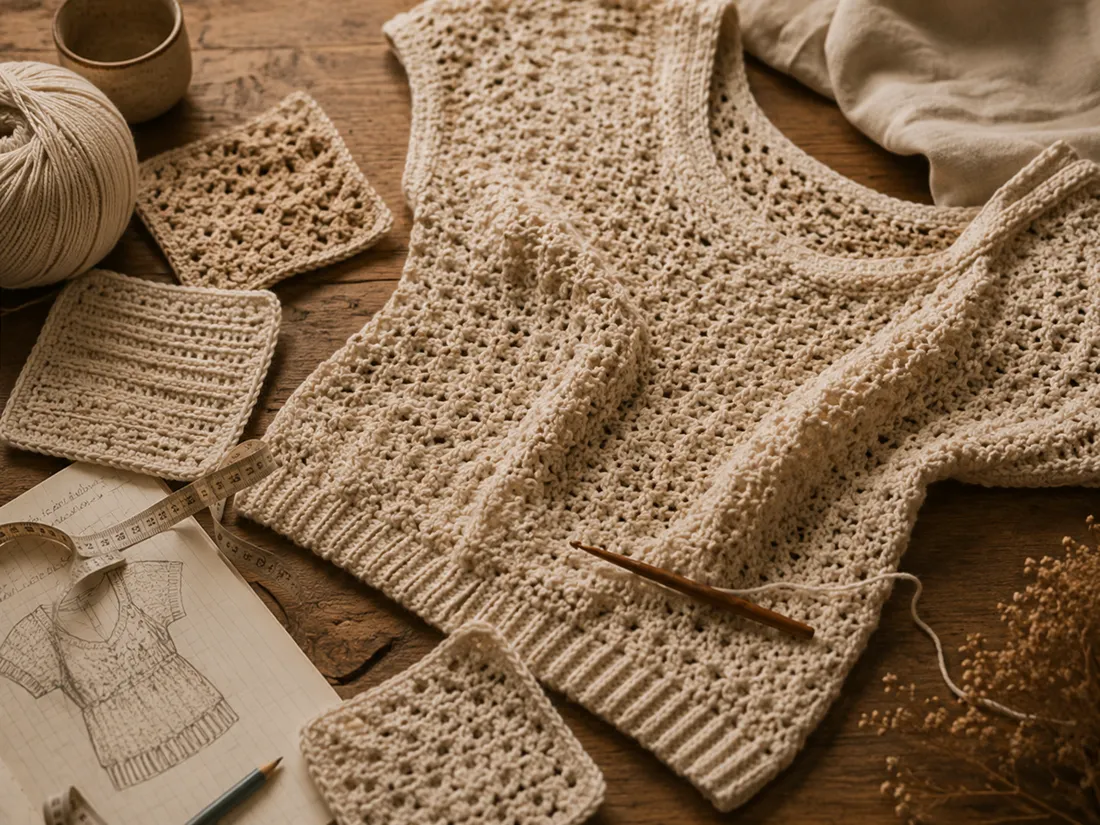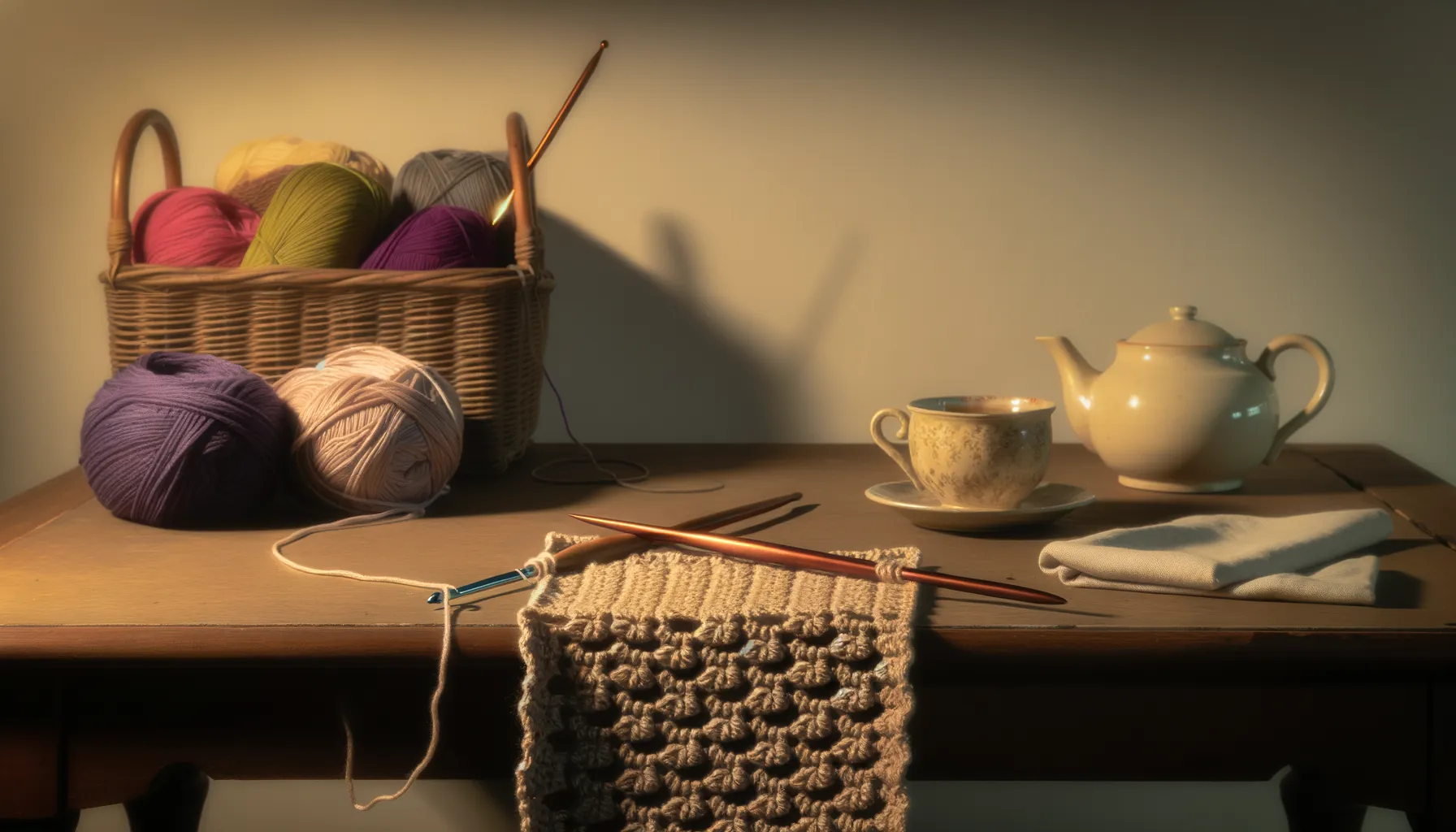
Waffle stitch is a textured crochet pattern that combines regular double crochet (dc) with front-post double crochet (fpdc) and back-post double crochet (bpdc). The result is a deep, ridged grid that genuinely looks like a fresh waffle — more dramatic and architectural than most other crochet textures. It’s intermediate level: you need to understand front and back post stitches, but once that clicks, the pattern itself is a simple two-row repeat that builds quickly.
What is waffle stitch in crochet?
Waffle stitch uses three stitches — dc, fpdc, and bpdc — arranged in a repeating grid. The fpdc and bpdc stitches work around the vertical post of the stitch below, rather than into the top loops. This pushes fabric either towards you or away from you. When these push-forward and push-back stitches alternate in a grid pattern, they create the distinctive deep peaks and valleys that give waffle stitch its name.
Key abbreviations:
- dc — double crochet (worked into top loops as normal)
- fpdc — front-post double crochet (wrap hook around the front of the post below)
- bpdc — back-post double crochet (wrap hook around the back of the post below)
The stitch repeat is worked over a multiple of 3 stitches. The pattern alternates between just two rows, making it easy to memorise after the first few repeats.
How to make waffle stitch — step by step
You need: aran or DK yarn, a hook matching the yarn weight, scissors. Chain a multiple of 3, plus 2 (e.g. 20 chains gives 18 working stitches).
Row 1 (wrong side): Dc in 3rd chain from hook, dc in each chain across. Turn.
Row 2 (right side — waffle row): Ch 2, *fpdc around next st, fpdc around next st, dc in next st*, repeat to last st, dc in last. Turn.
Row 3 (wrong side — waffle row): Ch 2, *bpdc around next st, bpdc around next st, dc in next st*, repeat to last st, dc in last. Turn.
Repeat rows 2–3 for the full pattern. The waffle grid becomes visible after just 4–6 rows.
How to work fpdc: Yarn over, insert hook from front to back around the vertical post of the stitch below (not into the top V-loop), yarn over, pull up a loop, then complete as a normal double crochet. The stitch leans toward you.
How to work bpdc: Identical, but insert the hook from back to front around the post. The stitch leans away from you.
Work a 15-stitch, 8-row practice swatch before starting any project. The post stitches feel unfamiliar at first but become intuitive within a few rows.
Common waffle stitch mistakes
Fabric looks like plain double crochet — by far the most common problem, and almost always means the hook is going into the top loops of the stitch below rather than around the post. The post is the vertical bar of the stitch, below the top V. Look below the V and wrap around that vertical bar. If you can see the V at the top of the stitch still unused, you’re in the right place.
Ridges forming on the wrong side — if the grid faces away from you instead of towards you, fpdc and bpdc have been swapped. This usually happens when you work a row without turning, or lose track of which side is the RS. Place a stitch marker on the RS at the beginning of the project and check it each time you turn.
Tight, stiff fabric that won’t drape — waffle stitch is naturally dense, but if the result is board-stiff, go up half a hook size. Post stitches compress the work more than regular dc.
Losing stitch count mid-row — the 3-stitch repeat is easy to drift from, especially on wider pieces. Count after every row for the first 6 rows until the pattern becomes visual. A stitch marker at each repeat boundary helps on wider blankets.
Edges pulling inward — make sure your turning chain counts as the first dc (ch 2 = 1 dc) and that you’re working the last stitch into the correct position at the end of each row.
Waffle stitch versus other textured stitches
Waffle stitch produces the deepest, most architectural texture of the common crochet stitch patterns:
vs. bobble stitch — bobbles create individual raised bumps scattered across fabric. Waffle creates a continuous, evenly-spaced 3D grid. Waffle is warmer and more structural; bobbles are more decorative.
vs. basket weave — basket weave uses similar post stitches but arranged in horizontal bands rather than a grid. Waffle produces a more uniform texture; basket weave has a stronger directional pattern.
vs. moss stitch — moss stitch alternates sc and ch-1 for a light, open texture. Waffle is denser and far more three-dimensional. Different applications entirely.
Best projects for waffle stitch
Waffle stitch creates a thick, warm, structured fabric. It suits items where the texture is on display and warmth is welcome.
Dishcloths and facecloths are the classic introduction — a 20-stitch, 20-row square in cotton DK is the ideal first project. The texture is practical (the ridges are excellent for scrubbing), the small size means you finish quickly, and cotton yarn shows the stitch definition at its sharpest.
Blankets — a full waffle stitch blanket in aran weight is a striking make. Neutral colourways — oatmeal, stone, cream — let the texture speak for itself. Expect the finished item to be heavy and warm; this is a sofa throw rather than a lightweight summer blanket.
Cushion covers — waffle stitch holds its shape under pressure, making it one of the best crochet stitches for cushion covers. The grid texture looks excellent in both bold and neutral colourways.
Baby blankets — in DK cotton-blend at a slightly looser tension, waffle stitch makes a beautiful baby blanket. Keep the tension more relaxed than you normally would so the fabric stays soft rather than stiff.
Scarves and cowls — a narrow waffle stitch scarf in aran wool takes 3–4 hours and looks considerably more impressive than its difficulty level suggests. The dense fabric is warm and the texture holds its shape without blocking.
Tips for a clean waffle grid
- Always work post stitches around the post of the stitch in the row below, not the turning chain
- Use a smooth, plied yarn — post stitches need clearly defined vertical posts to grip; single-ply and fuzzy yarns make this harder
- Block cotton waffle pieces with a damp cloth and steam iron on medium heat — the grid snaps into crisp definition
- For wool, a gentle steam block is enough — the texture opens considerably with heat and moisture
- When counting stitches, count each dc and each post stitch as one stitch — they should always match your starting count
Waffle stitch is one of the most architecturally impressive textures in crochet, and it’s far more approachable than it looks. Once you’ve worked 10 minutes of post stitches, the logic of pushing fabric forward and backward becomes intuitive — and the crisp waffle grid builds itself from there.