Cross stitch uses one repeated stitch worked on counted-grid fabric from a chart. Hand embroidery uses dozens of different stitches on freehand designs. Cross stitch is the more predictable, beginner-friendly of the two. Embroidery is more versatile and the better fit if you want to draw with thread. Most people end up dabbling in both.
The honest difference between embroidery and cross stitch
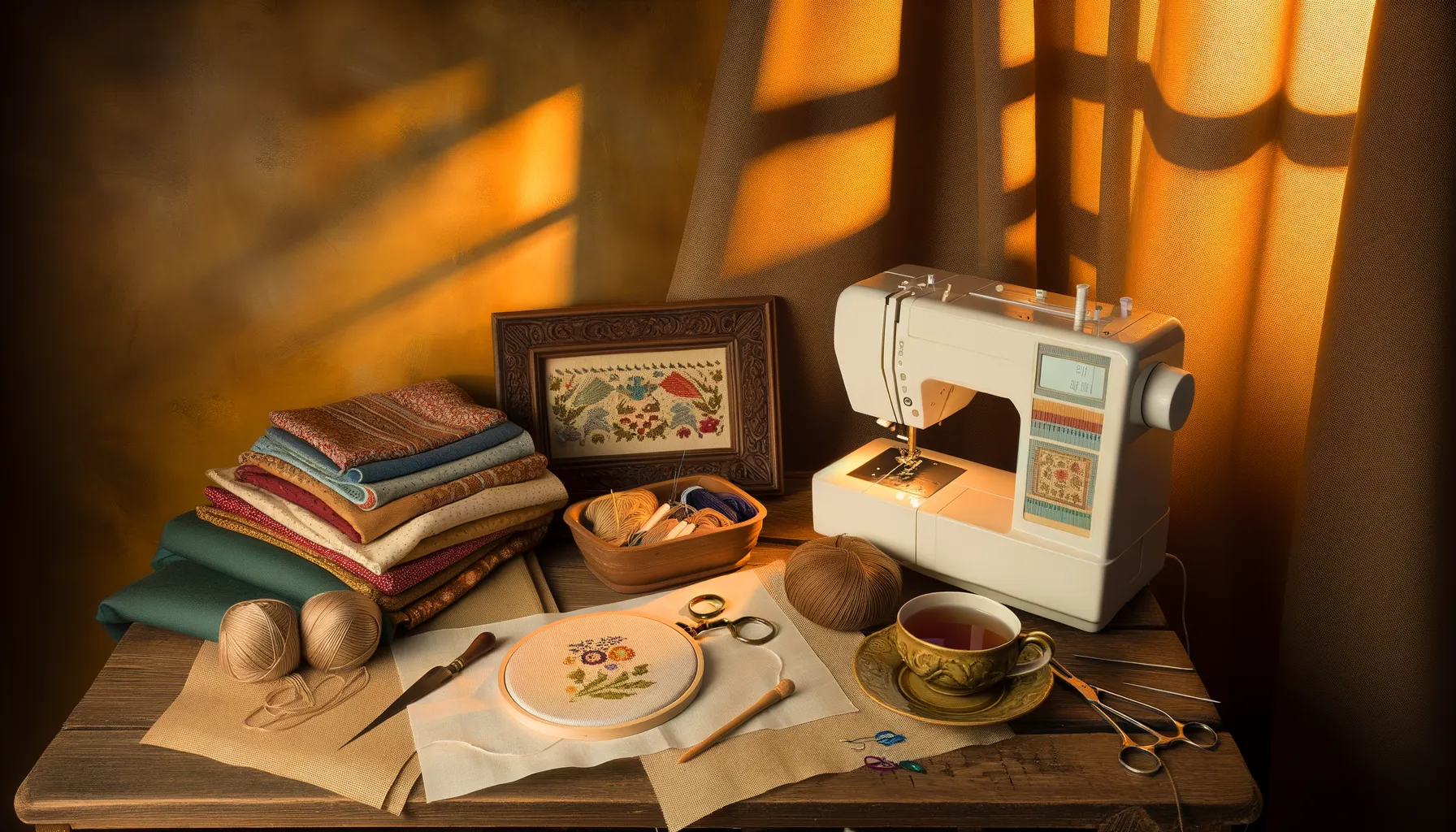
Cross stitch is technically a form of embroidery — it’s one specific stitch (the X) worked on aida or evenweave fabric with a counted grid. Every stitch lands on a pre-counted square, which is why patterns look like pixel art. Hand embroidery is the broader craft: any stitch, any fabric, any design you can draw.
That one distinction drives everything else. Cross stitch is rule-following: count the squares, place the X, move on. Embroidery is freer: you’re picking stitches, changing direction, filling shapes however you like. One feels like colouring in; the other feels like sketching.
Neither is ‘proper’ embroidery vs ‘just’ cross stitch. They’re different tools for different temperaments.
Which is easier to learn?
Cross stitch has the lower barrier. There’s one stitch to master, a counted grid telling you exactly where it goes, and a chart removing all design decisions. Most beginners finish a small cross-stitch piece within a weekend with almost no frustration.
Embroidery has a slightly steeper early curve because you’re learning several stitches at once — back stitch, satin stitch, French knot, stem stitch — and making design decisions about colour, direction and density. But the basics click quickly. Our is embroidery hard to learn guide walks through a realistic first-afternoon timeline.
If you’ve never held a needle before and want near-certain success, start with a small cross-stitch kit. If you want to learn a toolkit of stitches you can apply anywhere, start with embroidery.
What each one actually produces
Cross stitch produces pixelated designs — samplers with alphabets and quotes, pop-culture characters, maps, typography, geometric patterns. The aesthetic is distinctive: crisp, graphic, slightly retro. Anything that looks good at low resolution is a cross-stitch candidate.
Embroidery produces flowing, illustrative work — botanical hoops, monograms, portraits, text in flowing script, fabric art on clothes and home textiles. Because stitches go in any direction, embroidery can mimic painting, illustration and even sculpture (stumpwork adds raised 3D elements).
A good way to decide: look at pieces you love on Pinterest. If they’re mostly pixelated or charted designs, start with cross stitch. If they’re loose botanicals or flowing illustration, start with embroidery.
Cost to start — embroidery vs cross stitch kit prices
Both are among the cheapest crafts to start. Around £15–25 gets you comfortably set up in either.
For embroidery, our beginner kit is about £20: a beech wood embroidery hoop (6 inch, £6.99), a DMC cotton floss starter pack (£12.50), and John James crewel needles with plain cotton fabric (~£5.99). Full kit breakdown on our embroidery starter kit page.
For cross stitch, a dedicated starter kit lands around £15–18: aida cloth (14- or 16-count is standard for beginners), a 6-inch hoop, a needle suited to aida, and a pack of DMC floss for your chosen chart. Most beginners buy a complete boxed kit (pattern + fabric + floss + needle) from Hobbycraft or online, which runs £10–20 and removes guesswork entirely.
The one practical difference: cross stitch needs specific aida fabric; embroidery works on any tightly-woven cotton or linen. If you’ve already got fabric around, you can start embroidery for less.
How long each takes to ‘click’
Both reward you within your first sitting. The shape of the curve is just different.
With cross stitch, your first X is easy. Within an hour you’re producing consistent, identical stitches and the fabric starts to look like the chart. A small 4×4 inch piece finishes in 4–8 hours over an afternoon or two. A larger sampler or character piece can take 20–40 hours — satisfying precisely because the progress is so visible.
With embroidery, your running stitch and back stitch come in the first 30 minutes. Satin stitch and French knots take slightly longer to look neat. A small finished hoop is realistic in a single afternoon; a polished botanical hoop typically takes 6–10 hours spread over a week. More detail in our how long to learn embroidery guide.
Cross stitch projects tend to be longer but steadier. Embroidery projects are quicker but more varied.
Which is more meditative?
This is the question most people are really asking. Both are calming, but in different ways.
Cross stitch is meditative in the way counting sheep is meditative — rhythmic, repetitive, almost trance-like. One X after another, hours disappear. It’s what a lot of people reach for after a stressful day because it requires almost no decisions.
Embroidery is more like sketching. You’re making small decisions constantly — which stitch, what direction, how dense the fill. That’s absorbing in a different way: flow rather than repetition. Great for people who find pure repetition frustrating.
If your ideal evening is a podcast and switching your brain off, cross stitch. If your ideal evening is gently problem-solving with your hands, embroidery.
Personality fit — which one suits you
Pick cross stitch if you: like pattern-following and clear rules, find decision-making tiring at the end of a day, enjoy long rhythmic projects, love pixelated or graphic aesthetics, or want a very forgiving starting craft with almost-guaranteed results.
Pick embroidery if you: like creative freedom, enjoy learning a toolkit of techniques, want to customise clothes and home textiles, prefer flowing or illustrative designs, or want a craft you can keep expanding into harder techniques (goldwork, stumpwork, thread painting).
Neither is rigid. Plenty of rule-loving people love embroidery once they pick a pattern to follow, and plenty of freewheeling people love the meditative certainty of cross stitch.
Can you do both embroidery and cross stitch?
Yes — and the skills transfer far more than they do between crochet and knitting. Both use the same basic muscle memory (needle in, needle out, thread pulled through) and the same notions (hoops, floss, needles). Many of our equipment picks overlap: DMC floss works for both; a 6-inch beech hoop works for both; John James needles come in types for each.
If you start with cross stitch, moving into embroidery just means learning new stitches. If you start with embroidery, cross stitch is a single new stitch plus learning to read a counted chart. You’ll be fluent in both within a few months of starting either.
Our recommendation if you have to pick one
Our honest take: if you’re nervous about starting at all, pick cross stitch. It’s the lowest-friction craft in the needle-and-thread world. You’ll finish something you’re proud of within a weekend with almost no learning curve.
If you want something you can keep growing into — custom monograms on gifts, botanical hoops, embroidered jeans, decorated clothes — start with embroidery. You’ll have more to discover over the long term.
Either way, the course you pick matters more than the craft. Adriana Torres’ Contemporary Embroidery for Beginners on Domestika is the calmest, most complete embroidery start we’ve tested. For cross stitch, a single-project boxed kit with a printed chart is almost always a better first experience than any video course — start with a small beginner kit from a brand like Ha