Crafts & wellbeing
What the evidence actually says — honestly.
What the research actually says about making things and mental health — and which crafts the evidence points to for anxiety, low mood, loneliness, and stress.
A note before we begin: the benefits of craft on wellbeing are real and well-documented, but crafting is not a replacement for professional support. If you are managing a serious mental health condition, please speak with your GP or a mental health professional. In a crisis, contact the Samaritans on 116 123 (free, 24/7) or Mind on 0300 123 3393.
What the research shows
81%
of people in a major knitting study said it made them feel happier
Riley et al., 2016
82%
of regular craft workshop attendees reported improved wellbeing
Crafts Council, 2022
79%
said craft helped them meet people and reduce loneliness
Crafts Council, 2022
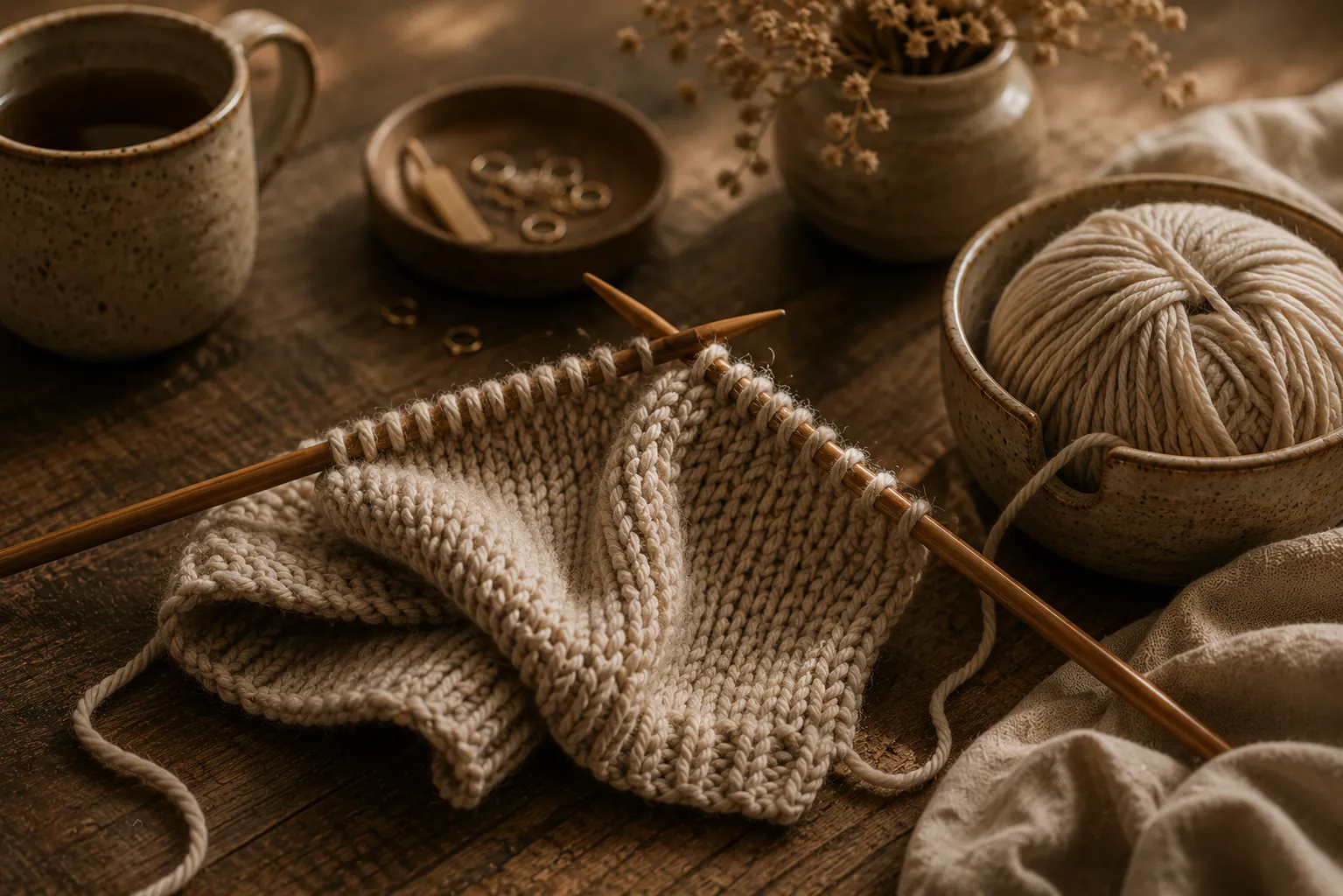
The most rigorous work is a 2016 systematic review in the British Journal of Occupational Therapy (Riley et al.), which reviewed 29 studies on the mental health effects of knitting and craft. It found consistent evidence of reduced anxiety, depression, and chronic pain perception — with the bilateral, repetitive hand movement hypothesised to produce effects similar to the bilateral stimulation used in EMDR therapy.
Which craft for which need
5 of 5 needs
Anxiety & racing thoughts
Knitting, crochetThe repetitive bilateral hand movement is documented as calming — described as similar to meditation or the bilateral stimulation used in EMDR. The rhythm is the key mechanism. It takes a few sessions to stop concentrating on the technique and start benefiting from the rhythm.
More on crafts for anxiety →Low mood & motivation
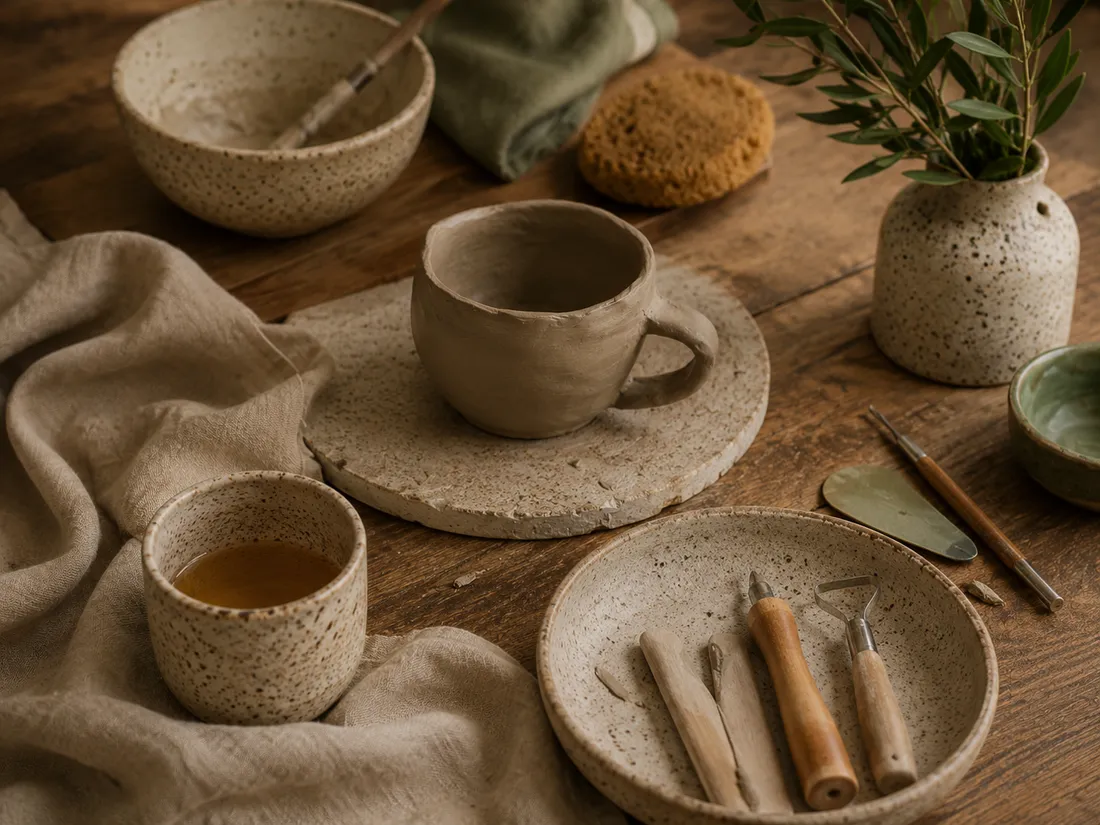
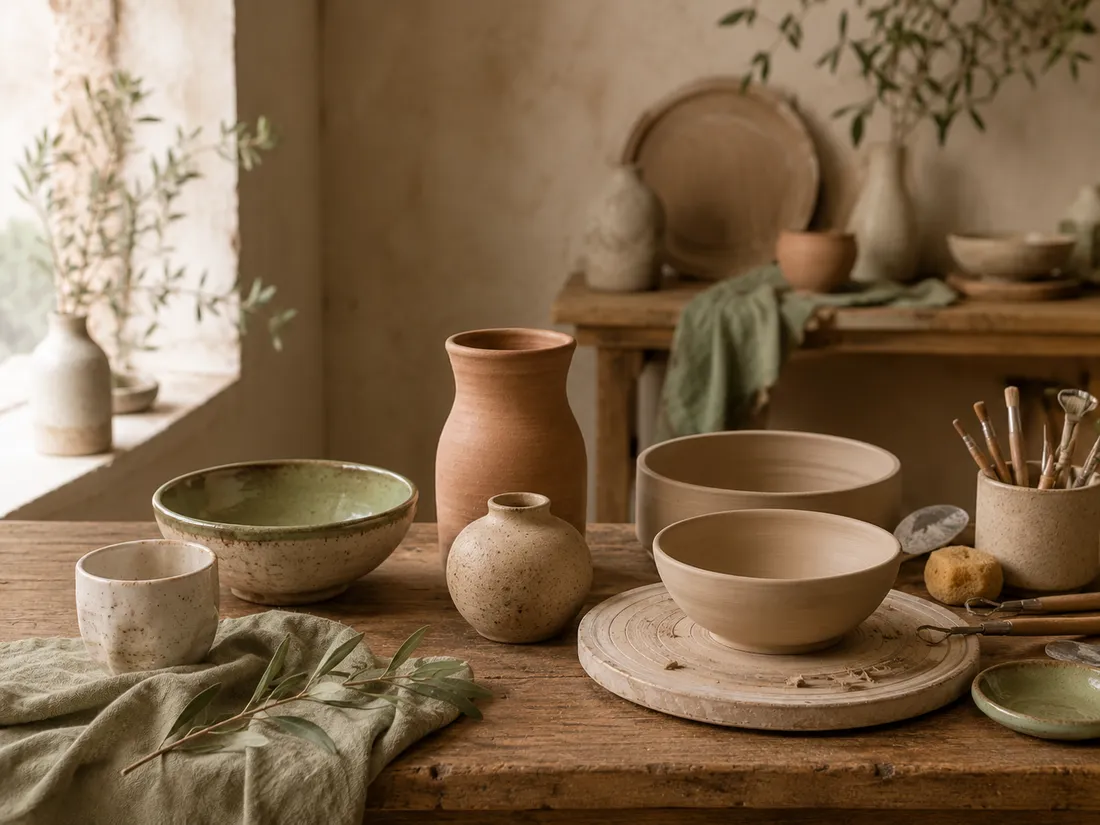
Pottery, glass blowingBoth have a dramatic, immediate quality that's harder to disengage from than home-based crafts. The studio environment and group setting provide structure and accountability. The physical nature of the work — particularly wheel throwing — produces absorption that home crafts can't match.
More on crafts for low mood →Chronic pain
Embroidery, fine needleworkThe focused attention on fine detail is consistently reported to reduce pain perception — this aligns with what neuroscience tells us about how attention and pain interact. When the mind is fully engaged elsewhere, pain signals compete for less processing bandwidth.
Embroidery for beginners →Loneliness & social isolation
Any group workshop — pottery courses especiallyMuch of the wellbeing benefit in the research comes from the social element of doing craft with others, not just the making itself. The 6-week pottery course format in particular produces genuine friendships in a way that one-off tasters usually don't — regular attendance builds real community.
Pottery classes UK →Stress & overwhelm
Macramé, weaving, any flow-state craftCrafts that produce a "flow state" — where challenge matches skill closely enough that you're fully absorbed — are most effective for stress. Macramé and weaving both have this quality once you're past the initial learning stage. The key is finding a craft you're comfortable enough with to stop thinking about technique.
Macramé guide →No needs match that filter — try “All needs”.
NHS social prescribing & craft
Since 2019, NHS England's social prescribing programme has allowed GPs and link workers to refer patients to non-clinical community activities — including craft workshops — as part of their care. It's primarily used for patients experiencing loneliness, low-level anxiety or depression, or chronic pain where distraction and absorption are therapeutic.
Some studios and CraftCourses providers work directly with social prescribing link workers. If your GP refers you, it's worth asking whether any local studios accept referrals — sessions may be subsidised or free.
Full guide to craft and social prescribing →Why craft produces the flow state
Psychologist Mihaly Csikszentmihalyi described flow as a state of total absorption — when the challenge level matches your skill level closely enough that you're fully engaged and lose track of time. Craft activities are particularly good at producing this because they have a clear, concrete goal (finish the row, trim the pot), give you immediate feedback (the stitch works or it doesn't), and scale in difficulty as you improve.
Pottery wheel throwing
Almost uniquely absorbing — the immediacy of the clay demands total physical and mental focus. Very hard to think about anything else.
Knitting & crochet
The rhythm becomes automatic after a few sessions. Once you stop thinking about technique, the repetition itself is what produces the calm.
Glass blowing
The material cools fast and you must act immediately. The time pressure produces complete focus — described by many as uniquely meditative for this reason.
Find a craft workshop near you
Both ClassBento and CraftCourses list workshops in most UK cities. CraftCourses is better for longer courses; ClassBento for one-off tasters.
Craft & wellbeing
FAQs
Everything you need to know before you book.