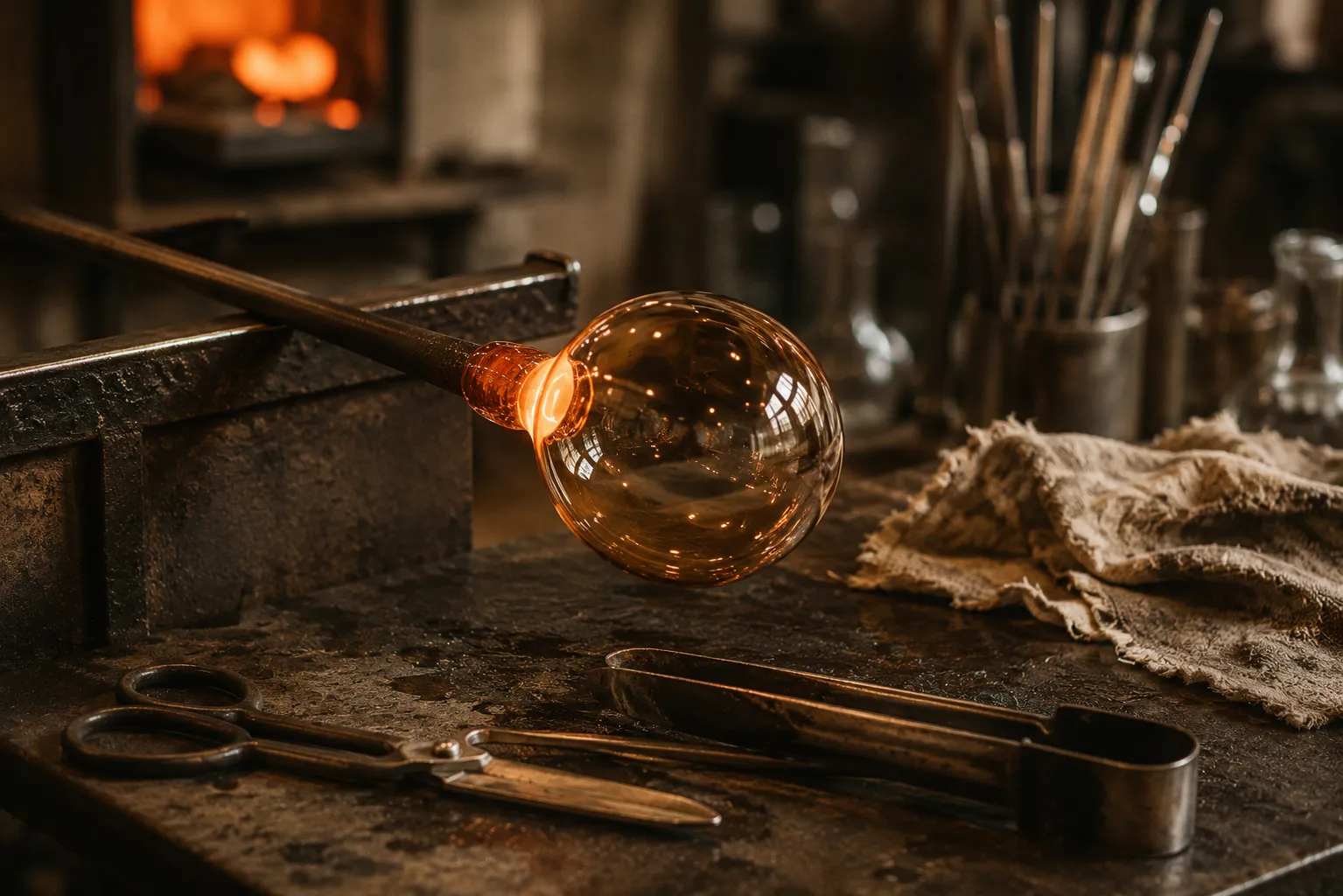

Glass blowing looks alarming from the outside. Furnaces glowing at over 1,000°C, molten glass on the end of a metal pipe, an instructor wielding tools that look medieval. The question of whether it’s actually safe — for someone who has never done it before — is a completely reasonable one.
The short answer is: yes, it’s safe. Here’s the longer version.
What actually happens in a beginner glass blowing class
You are not unsupervised near the furnace. The entire experience is structured around a professional glassblower who controls all the dangerous elements. Here’s the typical flow:
1. Safety briefing first. Before anyone touches anything, your instructor walks you through what you can and can’t touch, where to stand, and how to hold the blowpipe. This takes 5–10 minutes and is taken seriously.
2. The instructor gathers the glass. Your instructor opens the furnace, rotates the blowpipe, and gathers a gather of molten glass onto the end. You stand back during this stage. The furnace is 1,040–1,150°C and only the instructor works directly in front of it.
3. You take the pipe. Once the glass is gathered and shaped initially, the instructor hands you the blowpipe. The glass is still glowing orange — hot enough to burn on contact, but you’re holding a long metal pipe and the glass is on the other end. Your job is to blow through the mouthpiece (like blowing up a balloon) and follow the instructor’s directions.
4. Shaping with tools. The instructor uses specialist tools (jacks, tweezers, paddles, newspaper pads soaked in water) to shape the glass while you rotate the pipe. Some studios let you try the tools yourself under close supervision.
5. The annealing oven. When your piece is finished, the instructor transfers it directly to the annealing oven — a kiln held at around 500°C that slowly reduces in temperature over several hours. This prevents thermal shock from cracking the glass. Your piece stays here overnight and is posted to you within 1–2 weeks.
The actual risks — and how they’re managed
Radiant heat. The furnace radiates significant heat and you’ll feel it from several feet away. You never approach the furnace itself — that’s the instructor’s job. The working area near the furnace is warm but not dangerously so for observers.
The glass is hot. Molten glass at the end of a blowpipe is hot enough to cause severe burns on contact. You never touch it, and the long pipe keeps you well away from it. If glass drops (which it occasionally does), you step back — it’s safe to leave on the floor until cool.
Synthetic fabrics. This is the most commonly overlooked risk. Synthetic fabrics (polyester, nylon, acrylic) can melt rather than singe when exposed to radiant heat. Wear natural fibres — cotton, wool, denim — and avoid anything with significant synthetic content.
Footwear. Closed-toe shoes are non-negotiable. Drops of glass or hot tools on bare toes would be unpleasant.
How commercial class providers manage safety
Reputable glass blowing venues — including all studios listed through ClassBento in the UK — have:
- Professional instruction from practising glassblowers
- Public liability insurance specifically covering activity-based experiences
- Defined safety protocols and trained staff
- Equipment in good working order (furnaces, annealing ovens, ventilation)
- Participant ratios that ensure adequate supervision
ClassBento’s vetting process requires all listed studios to hold appropriate insurance and reviews. Studios with safety concerns are removed from the platform.
Is it right for you?
If the idea of working near heat bothers you significantly, glass blowing probably isn’t the right experience — the heat is real and the environment is viscerally different from a pottery or crochet class. But if you’re curious and comfortable following instructions, it’s one of the most remarkable things you can do in an afternoon.
The results are genuinely beautiful, the experience is unlike anything else, and it’s consistently one of the highest-rated craft experiences available in the UK.
Ready to book? See our picks for the best glass blowing experiences in the UK →, from London tasters