The short answer
The best needle felting kit for most UK beginners is a small single-project animal or character kit that includes carded wool, at least two felting needles, a foam pad and a photo-led pattern — expect to pay around £12 to £25. Buy by the project you actually want to make (a robin, a mouse, a sheep, a picture), check the needle count, and make sure there’s enough wool to finish. You do not need an expensive set to start.
🏆 Our top pick for beginners: a single-project animal kit from Hawthorn Handmade or The Makerss (around £12–£18). They include everything you need in one box — carded wool, two to three needles, a foam pad and a clear photo pattern — for one achievable evening make. Start here, then branch into pictures or multi-project sets.
In this piece
- What’s actually inside a needle felting kit
- Best needle felting kits for beginners
- Best kits by project: animals, pictures and Christmas
- How to choose a kit (what to look for)
- Wool, needles and pads explained
- Common mistakes (and how to avoid them)
- What to try next
What’s actually inside a needle felting kit
Needle felting is simple: you repeatedly stab barbed wool with a special needle until the fibres tangle and firm up into a solid shape. Because there are no stitches or knots, a kit only needs a few things — but the quality of those few things makes all the difference.
A good UK beginner kit will contain:
- Carded wool in the project colours. “Carded” means the fibres are brushed loose and fluffy, which is what you want for felting. Core wool (cheaper, often grey or off-white) is used to bulk out the shape; coloured tops go on the surface.
- Felting needles — ideally two or three. Needles are graded by gauge: a coarse 36-gauge for fast shaping, and a finer 38- or 40-gauge for smoothing and detail.
- A working surface — a dense foam block or a wool felting pad. This protects your table (and the needle) as you stab.
- A pattern with clear photos and steps.
Nice extras include a finger guard, a multi-needle holder, and a small pair of scissors. If a kit lists only one needle and no pad, treat it as a refill rather than a true starter kit.
Best needle felting kits for beginners
If you’ve never felted before, start small and finish something. A single animal or character is the ideal first project — it teaches you shaping, attaching parts and adding detail in a couple of hours.
When choosing a beginner or starter kit, prioritise these things over brand:
- A whole project in the box. You want wool, needles, pad and pattern together, so you’re not hunting for extra bits halfway through.
- More than one needle. Beginners snap needles — it’s normal. Two or three included needles means you won’t grind to a halt.
- A beginner-rated pattern. Look for words like “first felt,” “no experience needed,” or a clear difficulty marking.
Reputable UK makers and suppliers to look for include Hawthorn Handmade, The Makerss, World of Wool, Heidifeathers and Trimits. These are widely stocked in British craft shops and produce genuine beginner kits with British wool.
Needle felting kits compared
| Kit type | Typical UK price | Best for | UK makers to look for |
|---|---|---|---|
| Single animal / character | £12–£18 | Your first-ever felt; quick gifts | Hawthorn Handmade, The Makerss |
| Picture (2D, framed or hoop) | £15–£22 | Relaxing makes, no 3D shaping | Hawthorn Handmade, Heidifeathers |
| Christmas / seasonal | £12–£20 | Festive gifts, fast wins | The Makerss, Trimits |
| Multi-project starter set | £20–£30 | Trying several makes; best value | World of Wool, Heidifeathers |
Prices are typical UK ranges for starter and single-project kits as of 2026.
Best kits by project: animals, pictures and Christmas
The “best” kit really depends on what you want to make. Here’s how the popular options compare.
Animal and character kits
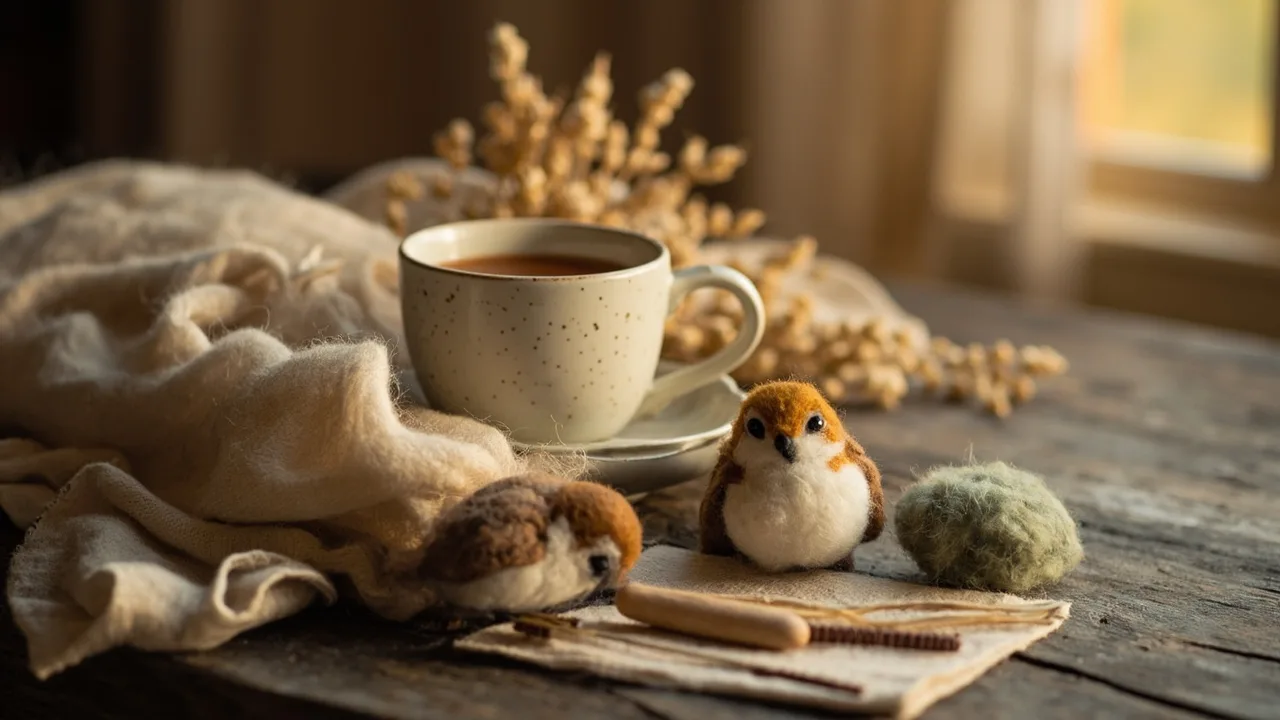
Small animals — mice, sheep, hedgehogs, foxes, cats and dogs — are the classic first make. They’re forgiving because a slightly wonky shape still reads as charming. A robin or a little mouse is a genuinely achievable evening project. If you want to felt a portrait of your own pet, choose a kit labelled for that animal so the wool colours match.
Picture (2D) kits
Needle felting pictures are flat designs felted onto a wool background inside a frame or hoop — think a fox in autumn leaves or a coastal scene. These are relaxing, very beginner-friendly, and there’s no 3D shaping to master. Look for a kit that includes the backing felt and, ideally, the frame.
Christmas and seasonal kits
Robins, gnomes, baubles and miniature trees are popular as gifts and make a good first felt because they’re small. They sell out from October onwards, so buy early if you’re felting for the festive season.
How to choose a kit (what to look for)
Run through this quick checklist before you buy:
- Needle gauge and count. At least two needles, with a coarse and a fine option. One needle is not enough.
- Enough wool to finish. Cheap kits sometimes skimp on core wool. If the photo shows a chunky animal, you need a decent amount of bulk fibre.
- A foam or wool pad included. Without one you’ll blunt needles and mark your table.
- Skill level stated. “Beginner” or “no experience needed” saves frustration.
- Clear photo instructions. Felting is visual; a wall of text won’t help.
- A project you actually like. You’ll stab thousands of times — pick something you want to finish.
For a first kit, ignore large 50-colour wool assortments. They’re great value later, but a focused single project will teach you more.
Wool, needles and pads explained
Understanding the three core materials makes every kit easier to judge.
Wool. Most British kits use carded wool batts or “tops.” Core wool bulks out the shape cheaply; coloured merino or Corriedale tops give a smooth surface. If you go looking for extra wool for needle felting, buy carded fibre — combed top alone is harder to felt for beginners.
Needles. Felting needles are barbed along the tip, which is what tangles the fibres. They’re brittle and snap if you bend them sideways, so stab straight up and down. Keep spares: a pack of replacement 38-gauge needles is cheap insurance.
Pads. A high-density foam block is the standard. A wool felting mat lasts longer and is kinder to needles but costs a little more. Either works; just don’t felt directly on a hard surface.
Common mistakes (and how to avoid them)
- Stabbing your fingers. The single most common beginner injury. Work slowly, keep your supporting hand to the side, and use a finger guard until your technique settles.
- Bending the needle. Always stab straight in and out. Twisting or levering snaps the tip instantly.
- Not felting firmly enough. Loose, fluffy results usually mean you stopped too soon. Keep going until the wool springs back and holds its shape — it firms up more than you expect.
- Adding colour too early. Build a firm core first, then add surface colour. Detail felted onto soft wool just sinks in.
- Running out of core wool. If your shape stays small and squashy, you likely need more bulk fibre underneath. This is why kit wool quantity matters.
None of these are hard to fix, and all of them get easier within your first hour of practice.
What to try next
Once you’ve finished your first felt, branch out with these Hobbify reads:
- Best craft hobbies to start as an adult in the UK — see how needle felting compares to crochet, pottery and more on cost and difficulty.
- Crafting for mental health — why the repetitive rhythm of felting is so calming.
- Best online craft courses in the UK — if you’d like guided lessons to build your skills further.
Needle felting is one of the cheapest and most forgiving crafts to begin. Pick a small project you love, check the kit has two needles and a pad, and you’ll have something to be proud of by the end of the evening.