The short answer
If you’re genuinely torn, start with crochet. One active loop on the hook makes it more forgiving for a total beginner, and you can have a finished piece by the end of your first weekend. But if you already know you want to make a jumper, socks, or anything that needs to stretch and drape, start with knitting instead — knitted fabric does those jobs far better. They aren’t really in competition. Most people end up doing both.
In this piece
- The core difference: one hook vs two needles
- Which is easier to learn?
- Which is faster?
- Cost to start: crochet vs knitting
- What each craft makes best
- Which suits you? A quick personality check
- Common beginner mistakes (and fixes)
- What to try next
The core difference: one hook vs two needles
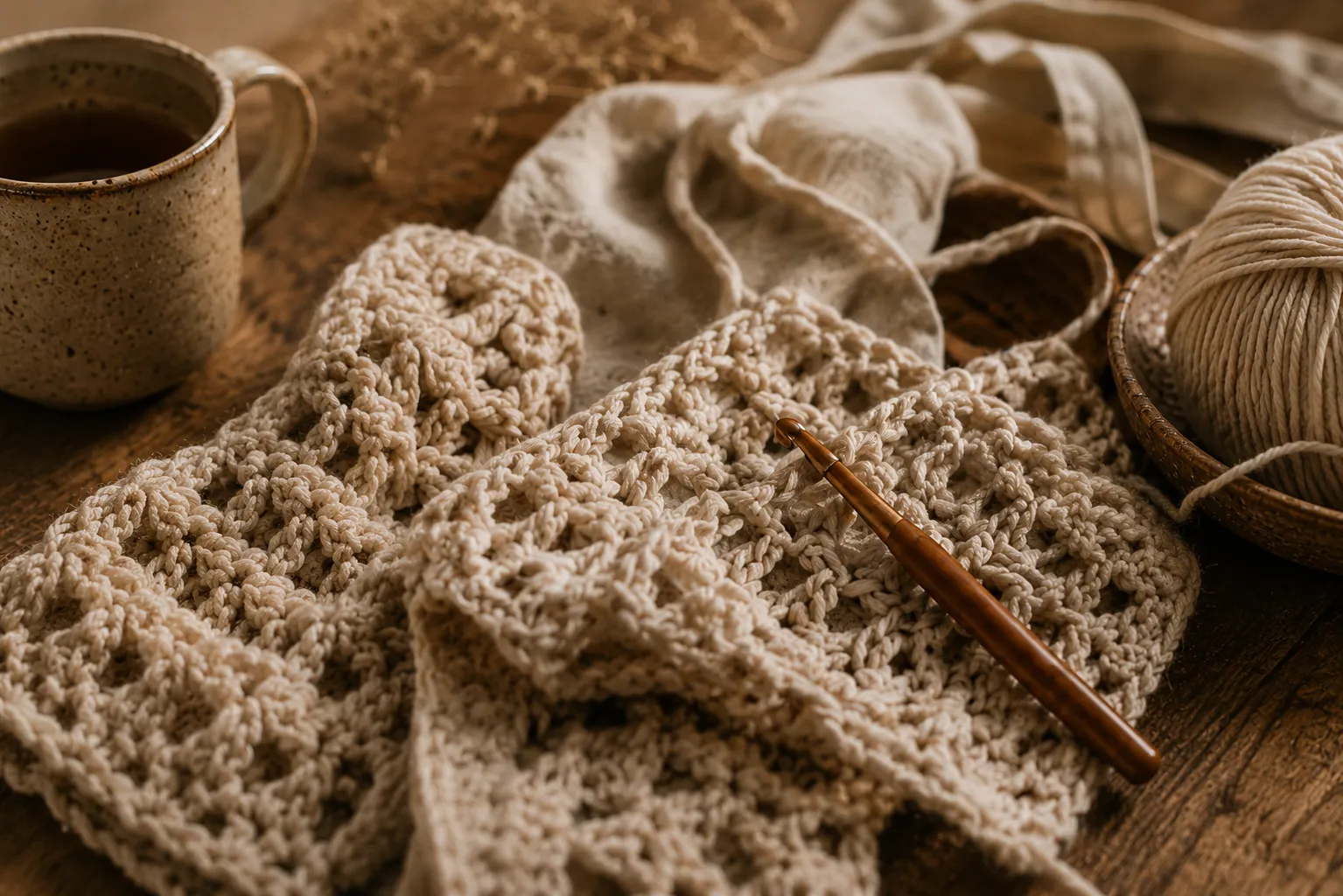
Crochet uses a single hook and completes one stitch at a time before moving on. Knitting uses two needles (or a circular needle) and keeps every stitch on the needle “live” until the whole piece is finished and bound off.
That one structural difference explains almost everything else:
- Crochet is denser, holds its shape, and is quick to pull back if you go wrong — yank the yarn and it unravels neatly to where you stopped.
- Knitting is stretchier and drapes against the body, but a dropped stitch can run down several rows if you don’t catch it.
Jargon check: a stitch is one loop of worked yarn; DK and aran are common UK yarn weights (DK is medium, aran is a touch chunkier); binding off (sometimes “casting off”) is how you finish knitting so it doesn’t unravel.
Which is easier to learn?
This is the most-searched question by far, so let’s be honest about it: crochet has the gentler first hour, but knitting has the faster long-term curve once you’re past it.
Crochet gives you a quicker payoff. Within an hour you’ll have a chain and a few rows of single crochet on the hook, plus a clear sense of progress. A finished dishcloth by the end of a weekend is completely realistic. That early win is what keeps beginners going — we go deeper in is crochet hard to learn.
Knitting asks for 30 to 60 slightly awkward minutes up front. Your hands don’t yet know where to go and the needles feel too long. Then the knit stitch clicks, your first row of garter stitch appears, and the curve gets gentle fast — because once you have knit and purl, you essentially have every basic stitch. More on that first hour in is knitting hard to learn.
One quiet advantage for knitting: it only has two core stitches (knit and purl). Crochet has more named stitches to learn — chain, slip, single, half-double, double and treble — each with its own muscle memory.
Which is faster?
Crochet is usually faster, stitch for stitch, because each stitch is taller and covers more ground. As a rough guide:
- A simple scarf: about 4–6 hours in crochet, 8–12 in knitting.
- A basic baby blanket: a weekend or two in crochet; closer to a couple of weeks of evenings in knitting.
If your goal is “finish something impressive quickly,” crochet tends to win. If your goal is “finish a garment I’ll actually wear,” knitting takes longer but looks better on the body.
Cost to start: crochet vs knitting
The starting cost is almost identical — around £15–20 either way. The small gap comes down to tools.
- Crochet, about £16: one 5mm hook (
£8.50), a ball of DK yarn (£2.80), and a set of locking stitch markers (~£4.99). A single hook covers your first month of projects. - Knitting, about £18: a pair of 6mm circular needles (
£9.99), a ball of aran yarn (£2.50), and stitch markers plus a tapestry needle (~£5.99). Circular needles cost a touch more than straight ones but work for both flat and in-the-round projects.
Crochet wins by a couple of pounds, but it’s not enough to base a decision on. Both come in well under £20 — enough to follow a full beginner course.
What each craft makes best
Neither craft is “better.” They make different things.
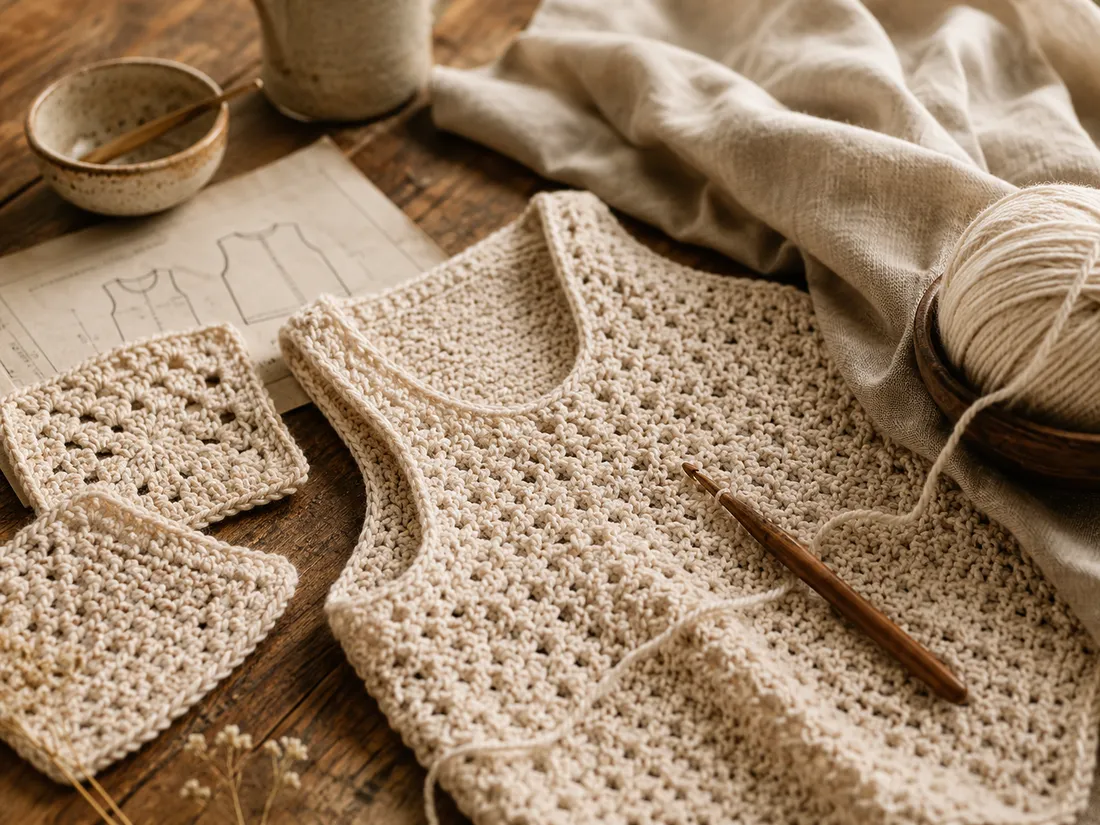
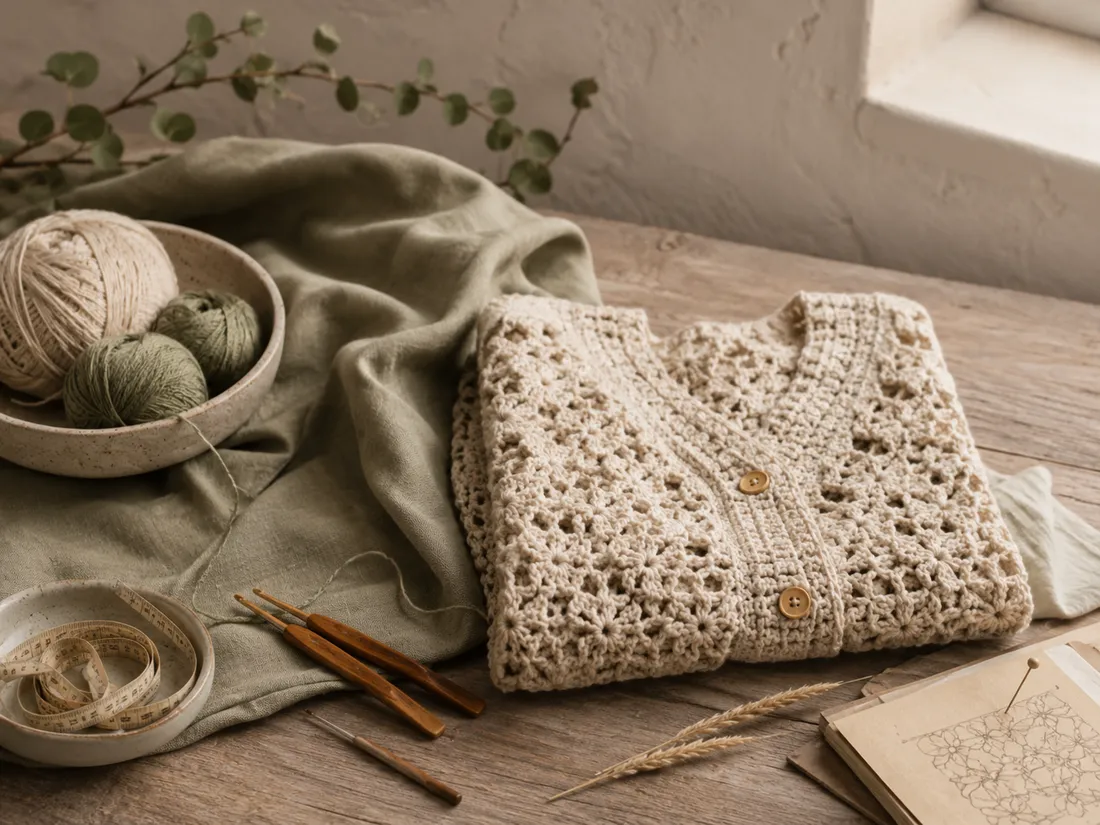
Crochet shines for: blankets, amigurumi (those small crocheted toys), bags, baskets, granny squares, and homeware where you want structure. The fabric is dense and holds its shape — perfect for a tote, less so for a sock. See the best crochet projects for gifts for quick wins.
Knitting shines for: jumpers, cardigans, socks, scarves with drape, and lace shawls — anything close-fitting. Knitted fabric stretches and sits against the body in a way crochet can’t match. Browse the best knitting projects for gifts for ideas.
A simple rule of thumb: if you’ve been eyeing a cosy hand-knit jumper, that’s knitting. If you want a chunky granny-square blanket for the sofa, that’s crochet.
Which suits you? A quick personality check
Pick crochet if you: want quick wins, like hopping between small projects, prefer visible stitches and structure, or are drawn to amigurumi, bags and accessories. It’s also easier to pause and count where you are, which suits anyone who’s easily interrupted.
Pick knitting if you: want something meditative for the evening, enjoy rhythmic repetition, are patient through an awkward first hour, or want to eventually make wearable clothing.
These aren’t rules — plenty of restless people love knitting for the calm it brings. But if you’re truly stuck, ask yourself: do I want a finished thing by Sunday, or a ritual I return to over weeks? Your answer points the way.
Common beginner mistakes (and fixes)
A few traps catch nearly everyone, in both crafts:
- Crocheting or knitting too tightly. Beginners death-grip the yarn, and the work becomes stiff and hard to get the hook or needle into. Fix: loosen your hold and aim for stitches that slide. Tension evens out within a few hours.
- Working into the wrong loop (crochet). Skipping the turning chain or missing the last stitch makes your edges creep inwards or outwards. Fix: count your stitches at the end of every row until it’s automatic.
- Accidentally adding stitches (knitting). Yarn sitting over the needle can read as an extra stitch, so your rows quietly grow wider. Fix: keep the working yarn below the needle as you start each stitch, and count regularly.
- Dropped stitches (knitting). A stitch slips off and runs down a few rows. Fix: don’t panic — most drops can be laddered back up with a crochet hook. Use stitch markers to catch problems early.
- Choosing fiddly yarn first. Dark, fuzzy or very thin yarn hides your stitches and makes learning harder. Fix: start with a smooth, light-coloured DK or aran so you can see exactly what your hands are doing.
What to try next
If you’ve decided which one to begin with, line up the basics next:
- How long it takes to learn crochet — a realistic week-by-week timeline.
- How long it takes to learn knitting — what to expect from your first month.
- Can I teach myself crochet? — the self-taught route, and where a good course saves time.
Whichever you pick, the biggest variable isn’t the craft — it’s choosing one beginner course and following it all the way to a finished object. Do that, and you’ll be ready to add the other craft sooner than you’d think.