Not really. The first 30 minutes feel genuinely clumsy while your hands find the rhythm — but the knit stitch itself is simple. Most beginners have a consistent knit stitch by the end of day one, and a working scarf on the go by the end of week one. The sticking points aren’t the stitches; they’re tension, dropped stitches, and choosing a first project that’s too ambitious.
What the first hour of knitting actually feels like
Honest answer: awkward. Your hands don’t yet know where to go. The needles feel too long and oddly balanced. The yarn keeps slipping. You’ll drop a stitch within your first few rows and panic (it’s fixable — ignore the panic). Most people spend 30–60 minutes feeling like they’ve made a mistake choosing this craft.
Then the knit stitch clicks. It’s usually sudden — a row happens at normal speed, the next row feels easier, and within five minutes the rhythm locks in. From that point on, knitting is much gentler than the first hour suggests.
Almost everyone goes through this. It’s not a sign you’re uncoordinated or that knitting isn’t for you. It’s the price of entry — and it’s paid once.
Why knitting clicks faster than most beginners expect
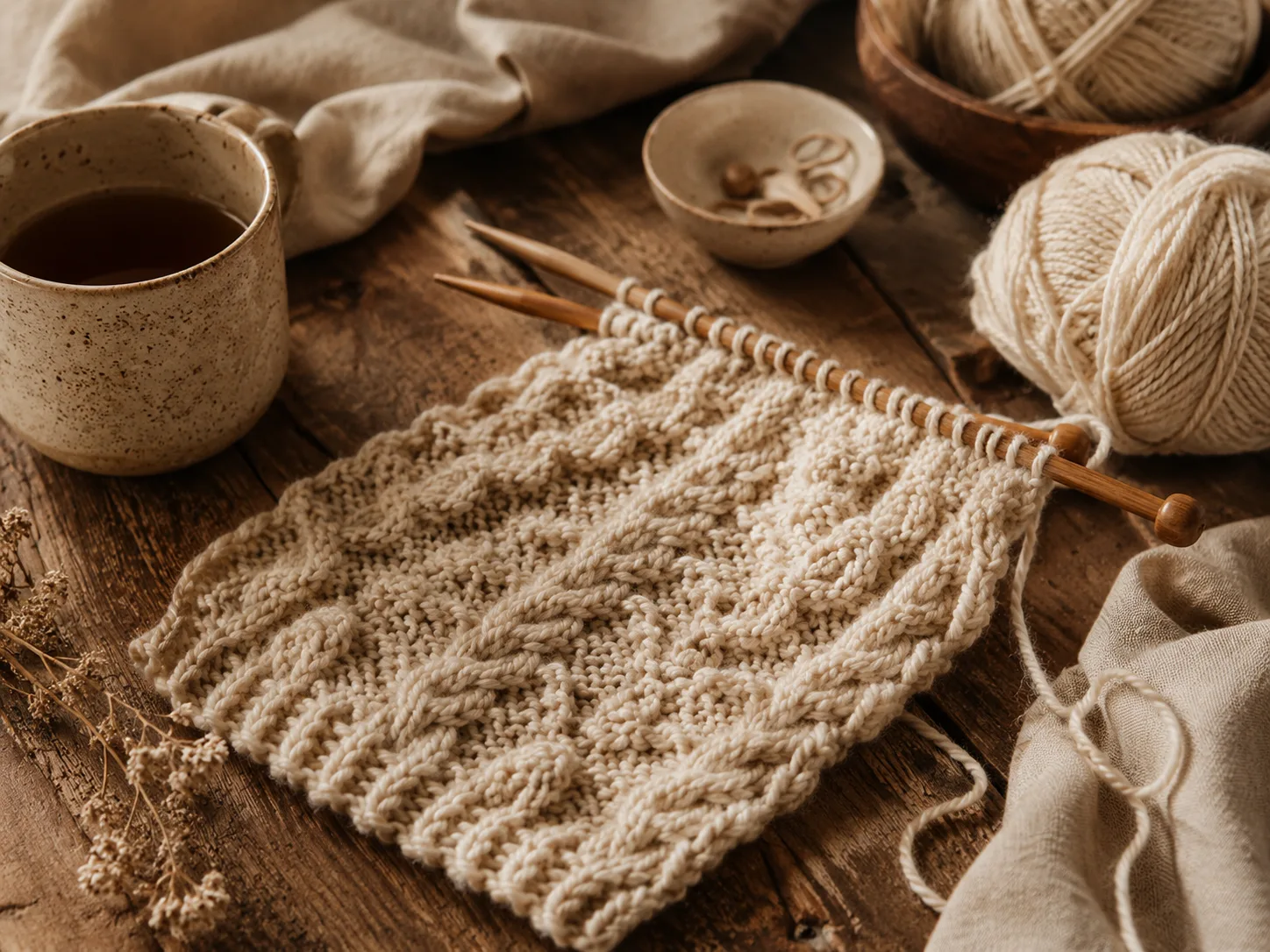
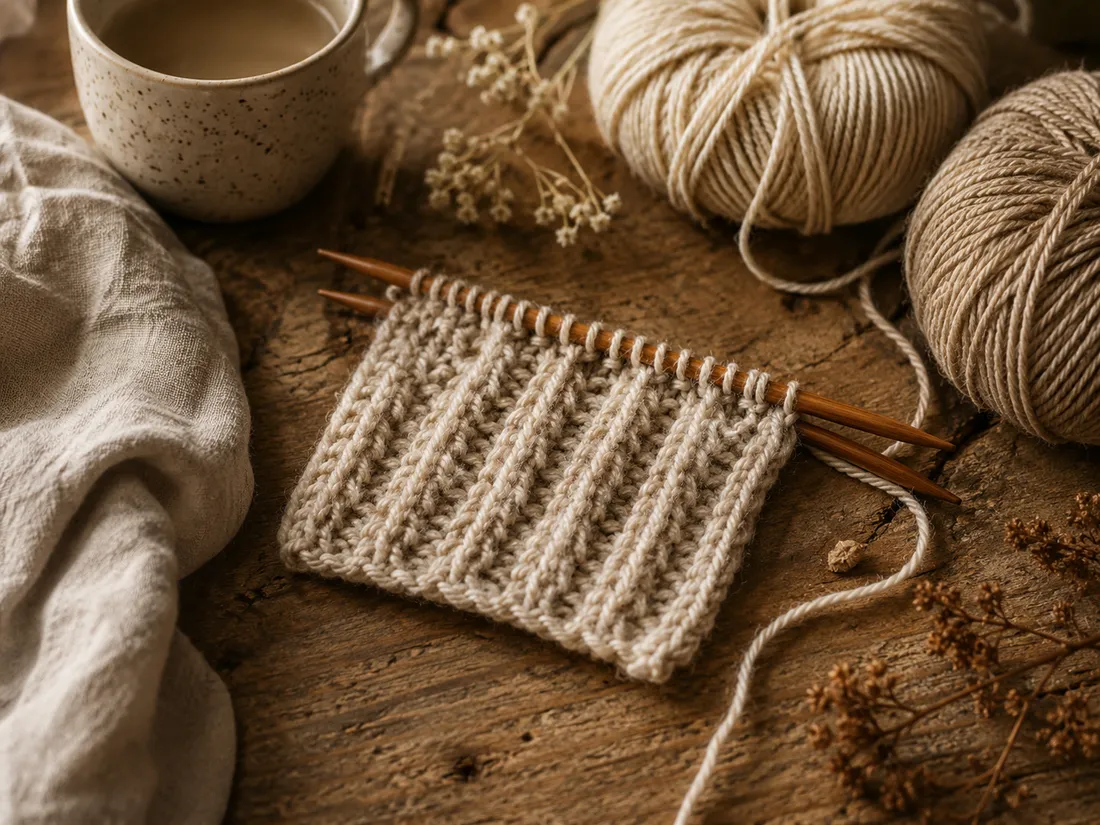
Knitting has fewer stitches to learn than you think. There are two: knit and purl. Everything else — stockinette, ribbing, cables, lace — is a combination of those two. Once you’ve got them, you’ve got the whole craft.
Compare that to crochet, which has chain, slip, single, half-double, double and treble stitches, each needing its own muscle memory. (More on that trade-off in our crochet vs knitting comparison.) Knitting front-loads its difficulty in the first hour; crochet spreads it across the first month.
The other thing that helps: the repetitive motion is soothing once it clicks. Knitters describe the feeling as ‘meditative’ far more often than crocheters do. The pace is slower, but in a way most people come to enjoy rather than endure.
Where beginners actually struggle
It’s rarely the stitches themselves. The three common sticking points are tension, dropped stitches and casting on.
Tension is gripping the yarn too tightly. Your stitches come out tight, hard to move on the needles, and uneven. The fix is conscious relaxation every few rows — and using chunky yarn with big needles while you learn, which forgives uneven tension.
Dropped stitches happen to everyone. A stitch slips off the needle and starts a ladder down your work. It looks catastrophic; it isn’t. A locking stitch marker picks up the loose stitch and holds it until you fix it. Most beginners drop stitches daily for their first two weeks, then rarely afterwards.
Casting on (getting your first stitches onto the needle) has a handful of methods, each taught by a different course. If your course uses the long-tail cast on, stick with it. Switching methods between tutorials is the fastest way to feel like you can’t knit — you can, you’re just being taught two things at once.
How long until you can make something real?
Realistic timeline, based on what we’ve seen in our own testing and from reader reports: first hour, cast on and garter-stitch rows (they’ll look uneven, that’s fine). By day 2–3, tension evens out and your knit stitch feels natural. End of week one, you’ll have a finished washcloth or the first half of a chunky scarf. Week two or three, a chunky scarf, a headband or a simple cowl. By month two or three, hats become realistic, and simple fitted garments are within reach a month or two after that.
Our how long to learn knitting guide covers this in more detail, including a week-by-week breakdown.
The key is choosing projects that match where you are. A scarf is a beginner project because it’s a rectangle — nothing to shape, no decreasing, no fitting. A hat is a bit harder because it involves working in the round. A jumper is genuinely harder because it requires gauge matching and shaping. Don’t jump levels.
The equipment that makes a difference
Bad tools turn knitting from ‘initially awkward’ to ‘infuriating’. Good tools don’t feel expensive because they’re not — a beginner kit is under £20.
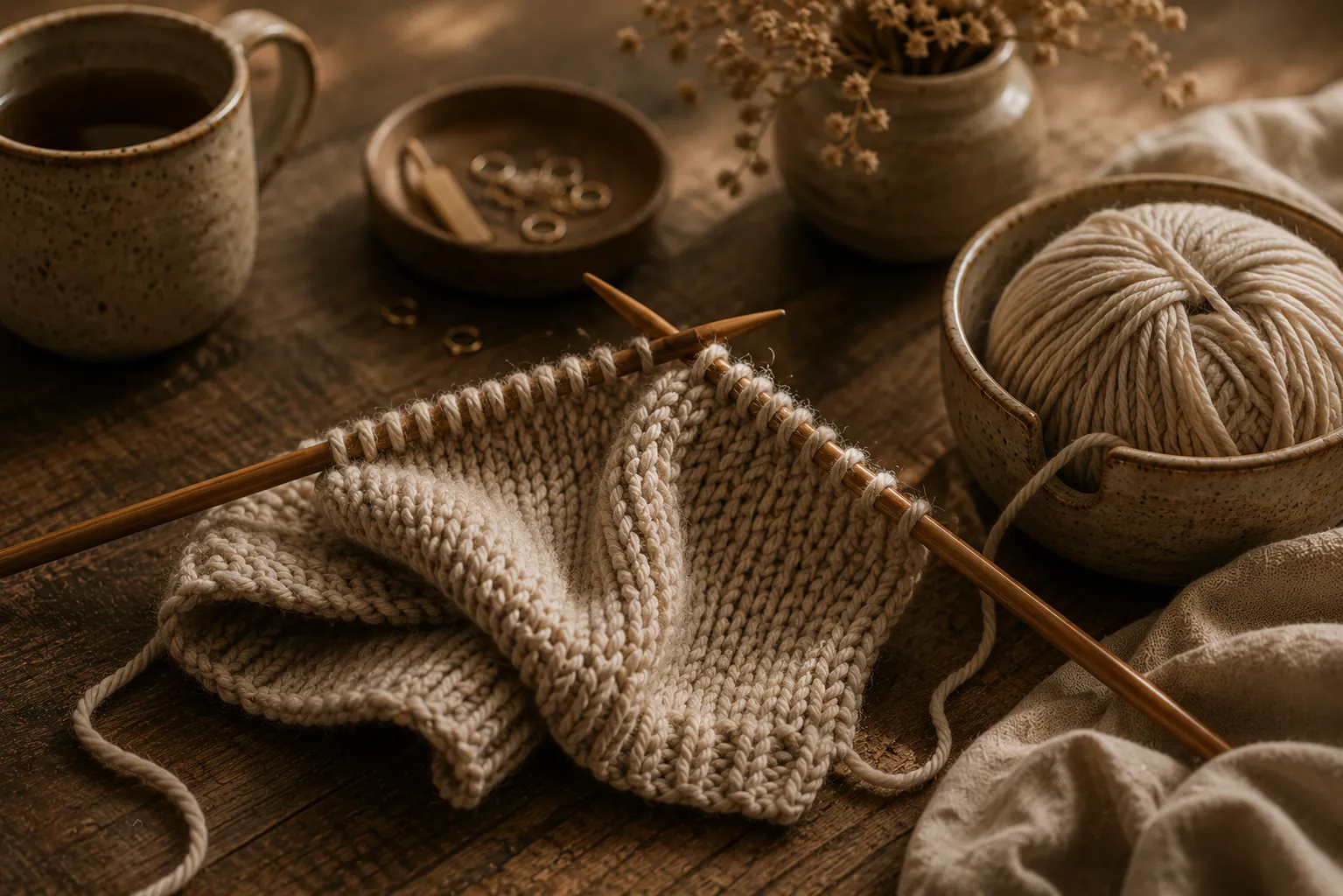
Our pick: a pair of Knit Pro Symfonie 6mm circular needles (£9.99 — warm, light wood that stops stitches slipping off), a ball of Drops Paris aran yarn (£2.50 — smooth cotton with clear stitch definition, forgiving of uneven tension), and a set of stitch markers plus a tapestry needle (~£5.99). That’s roughly £18 for a full beginner setup. Full breakdown on our knitting starter kit page.
Why circular needles rather than straights: circulars work for both flat projects (scarves, washcloths) and projects knitted in the round (hats, jumpers). One pair does everything straight needles do plus more. Most modern knitters use circulars almost exclusively.
What to avoid: dark or fuzzy yarn (you can’t see your stitches, making mistakes invisible), very thin yarn with small needles (slow, fiddly, discouraging), and cheap plastic straight needles (stitches slip off, yarn catches).
Can you learn knitting from YouTube, or do you need a course?
YouTube works if you’re disciplined about sticking with one teacher. A structured course works better for most people because someone sequences the lessons for you, so you don’t jump ahead and get stuck.
Our top pick for beginners is Tin Can Knits’ Learn to Knit — the gentlest hand-hold we’ve tested, and it ends with a finished scarf and a hat rather than a single cowl. If you prefer a subscription with a warmer teacher, Skillshare’s Knitting with Hannah includes genuine left-handed support and is our close-second pick.
Whichever you pick, commit to one course all the way through before adding other teachers. The fastest way to stay stuck is to bounce between three YouTubers teaching three different cast-on methods in your first week.
Who struggles most with knitting?
In our experience, three types of beginner find knitting harder than average: people with hand or wrist pain (the repetitive motion can aggravate existing RSI — circular needles and frequent breaks help), people who try to learn on tiny needles with fine yarn (start on 6mm or 8mm needles with chunky yarn), and people who jump to complex patterns (ribbing, cables, lace) before the basic knit stitch feels automatic.
Left-handed knitters also sometimes struggle with the standard right-handed teaching — which is why we specifically recommend courses that include left-hand demonstrations (Skillshare’s Knitting with Hannah has these built in).
None of these are reasons not to knit. They’re just reasons to choose the right starting setup. Almost everyone who starts with good needles, chunky yarn and a structured course gets past