
The online craft course market in the UK has matured significantly in the last few years — partly driven by the pandemic, partly by Domestika’s expansion into English-language content. There are now genuinely good options for learning many crafts from home, at a fraction of the cost of in-person classes.
But not all platforms are equal, and not all crafts translate to video learning. Here’s what’s actually worth your money in 2025.
Quick answer
Domestika is the best online craft course platform for most UK learners in 2025. Individual courses cost £7.99–£15 on sale (no subscription needed), production quality is consistently high, and the catalogue covers crochet, knitting, embroidery, macramé, jewellery making, and more. For crafts like pottery, glass blowing, and foraging, in-person classes remain essential.
The platforms worth knowing about
Domestika
Domestika is a Spanish-origin creative learning platform that’s built an impressive catalogue of English-language craft courses. The production quality is consistently high — courses are studio-shot with multiple camera angles, close-ups that actually show hand positions, and clear chapter progression.
Best for: Crochet, knitting, embroidery, macramé, jewellery making, illustration, surface pattern design.
Pricing: Courses are listed at £40–£80 but are almost always on sale for £7.99–£15. First-time buyers frequently get 40% off. No subscription required — you buy individual courses and keep them forever.
Limitations: No live Q&A. The community forums per course are useful but less immediate than a live workshop. Some courses have English subtitles rather than English instruction (always check before buying).
Bottom line: The best value platform for standalone craft video courses in the UK.
Skillshare
Skillshare is a subscription-based platform (around £14/month or £84/year) with an enormous range of creative courses. The craft selection is decent but thinner than Domestika, and production quality is more variable — anyone can teach on Skillshare, whereas Domestika curates its instructors.
Best for: People who want to dip into multiple creative disciplines — craft, design, illustration, writing, photography — on one subscription. Less compelling if craft is your only interest.
Pricing: ~£14/month after free trial. Good value if you use it for multiple subjects.
Bottom line: Worth it if you’re also learning design, illustration, or photography alongside craft. Not worth it if craft is your only focus.
→ See the full Skillshare vs Domestika comparison for a head-to-head on pricing, quality, and which to choose.
YouTube
Free, enormous, and completely unstructured. YouTube has exceptional craft content — some of the best crochet and knitting instructors in the world post there. The challenge is that you have to find and sequence the content yourself, quality is wildly inconsistent, and there’s no clear progression from beginner to intermediate.
Best for: Supplementing a structured course (looking up a specific technique, watching an alternative explanation of something you’re stuck on). Also good for people who already have some knowledge and just need to learn a specific stitch or method.
Limitations: Time-consuming to find quality content. No structure. Easy to spend an hour watching videos that don’t actually teach you the skill.
Bottom line: Excellent as a supplement. Not the right starting point for a complete beginner.
Which crafts work online vs in person
Some crafts transfer to video learning very well. Others simply don’t.
Online learning works well for:
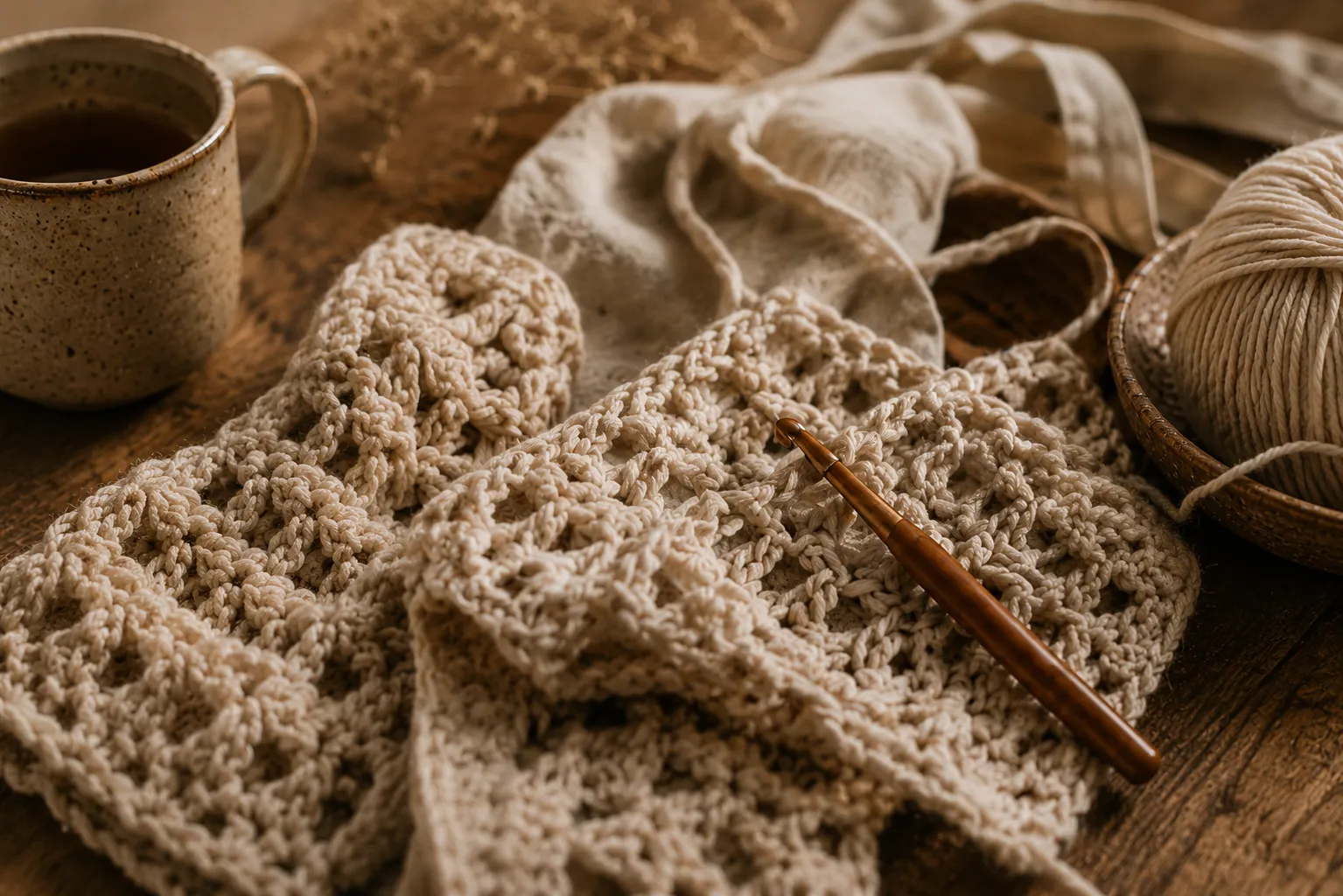
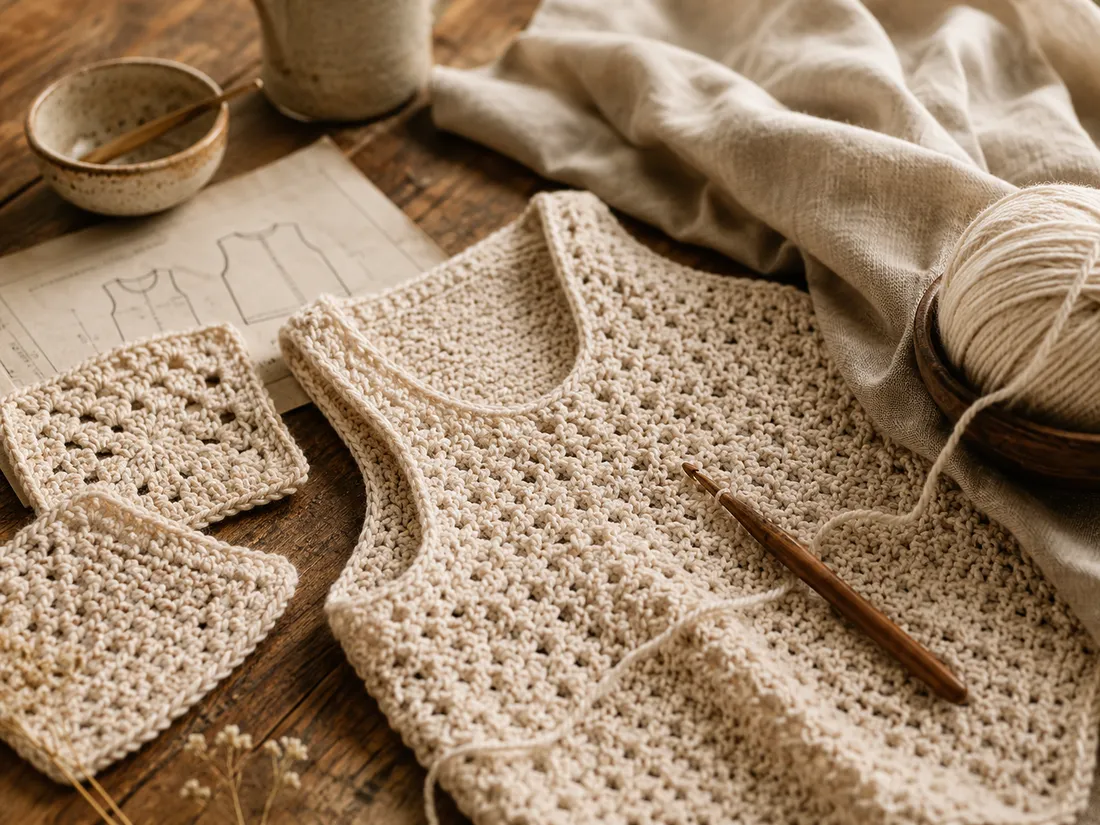
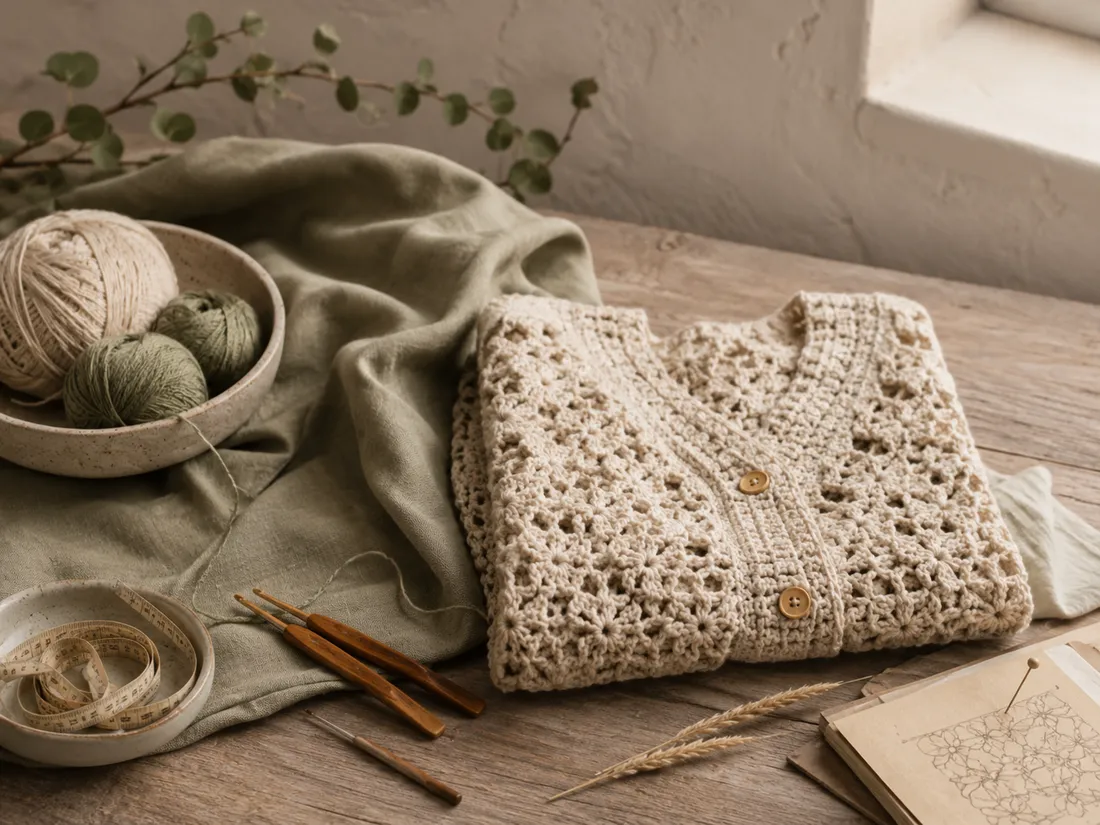
- Crochet and knitting — the hand movements are relatively subtle and video close-ups capture them clearly. The rhythm is something you develop through practice, and pausing/rewinding video while you practise is genuinely effective.
- Embroidery — thread handling and stitch technique come through on video clearly.
- Macramé — knot sequences are easy to follow in video with pause-and-rewind.
- Sewing — technique-heavy but very learnable from video, especially with pattern sewing where the steps are sequential.
- Watercolour and illustration — almost perfectly suited to video.
Online learning works poorly for:
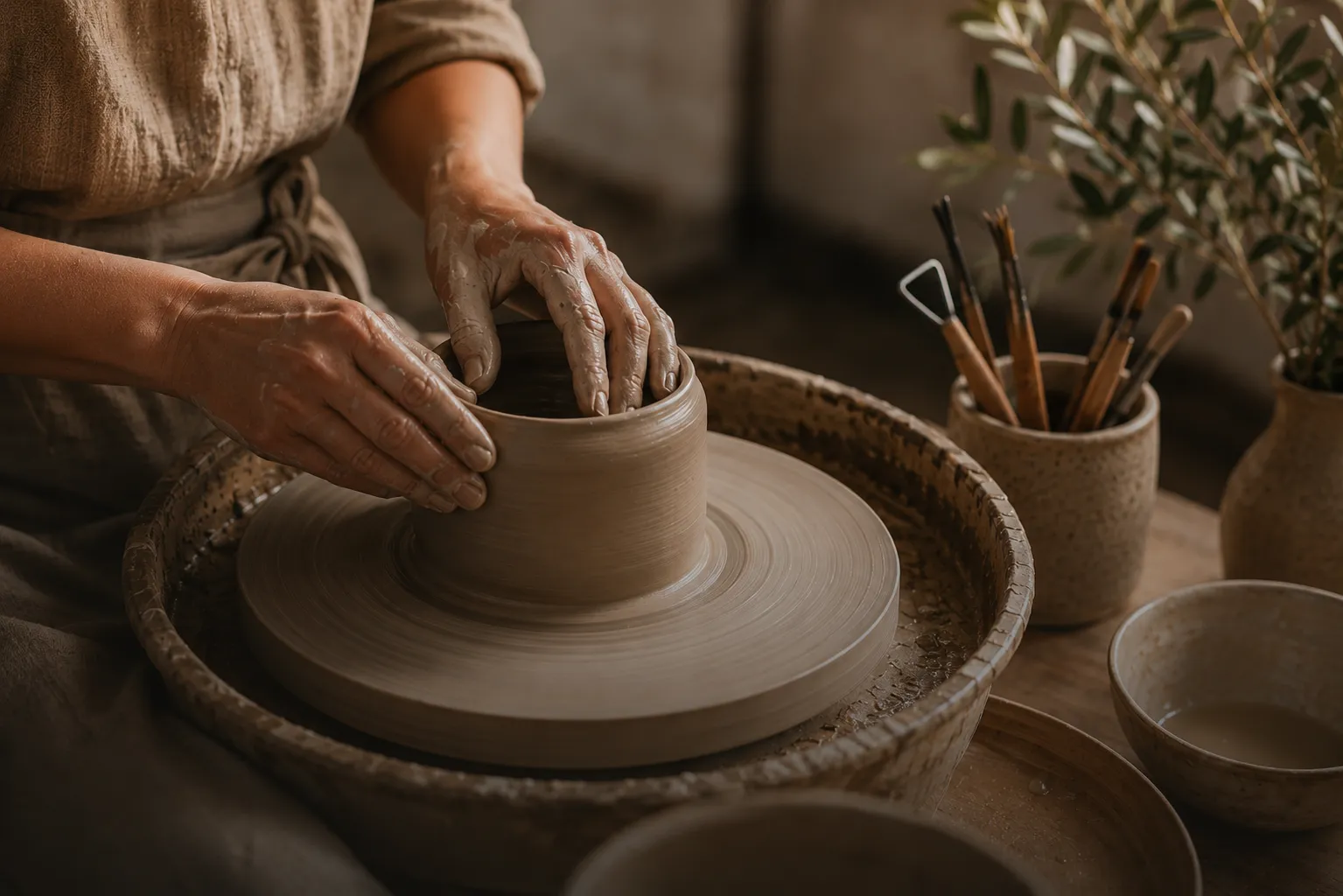
- Wheel-throwing pottery — requires physical feedback you can’t get from watching. Centring clay is a kinesthetic skill that takes many sessions of in-person practice to develop.
- Glass blowing — requires specialist equipment and in-person instruction for safety reasons. Not learnable at home.
- Blacksmithing — same issue.
- Foraging — plant and fungi identification requires field experience. An online course can teach theory, but real skill requires time in the field with a qualified guide.
Which craft can you learn online?
Works well online: crochet, knitting, embroidery, macramé, sewing, watercolour, illustration — video close-ups capture hand technique clearly, and pause-and-rewind practice is effective.
Needs in-person instruction: wheel-throwing pottery, glass blowing, blacksmithing, foraging — these require physical feedback, specialist equipment, or field experience that video cannot replicate.
Our recommended starting points
For crochet: Start with Binge Knitting’s “Knitting and Crochet Basic Techniques” on Domestika → — 14,000+ reviews, covers both crafts so you can test both before committing.
For knitting: Bettaknit’s “Introduction to Creative Knitting Techniques” → — modern approach, produce a finished project in the course.
For pottery, glass blowing, or foraging: In-person is the right choice. See our guides to pottery classes UK →, glass blowing experiences →, and foraging courses →.