
The most common question first-time pottery students ask — right after “will I be terrible at this?” — is what to wear. The answer is simpler than you’d think, but there are a few genuine pitfalls worth knowing before you reach for your favourite jumper.
The core rule: assume clay will end up on you
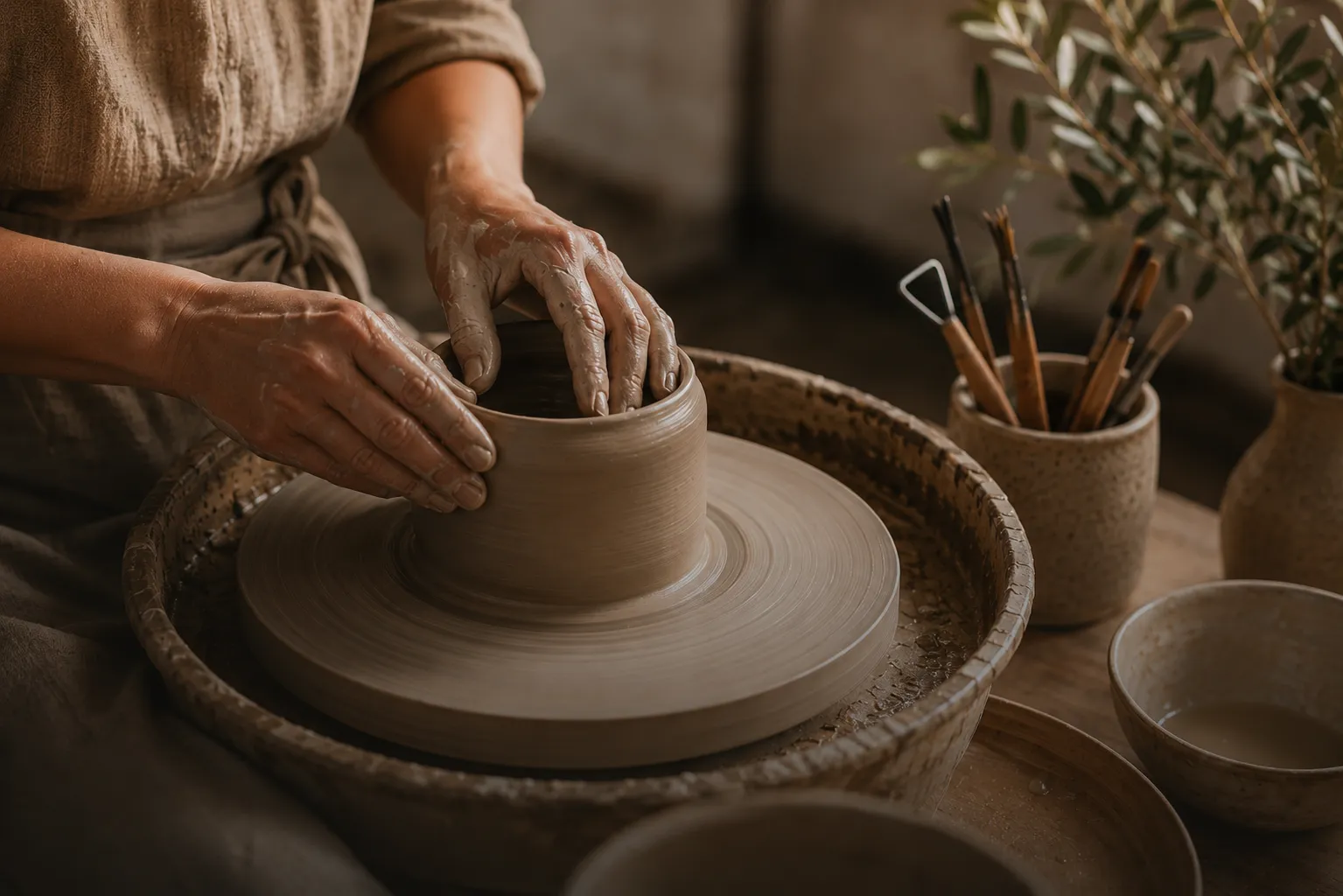
It will. Wheel throwing produces a fine mist of clay-water when the wheel is spinning, and your forearms, front and occasionally your face will get splattered. Hand-building is more contained but hands and aprons still get thoroughly coated. This isn’t a disaster — clay washes off — but if there’s any garment in your wardrobe you’d be upset to ruin, today is not its day.
What to wear
Top: Something old and expendable. A long-sleeved top you can push or roll up to the elbow is ideal — wheel throwing soaks your forearms, and loose fabric trailing into wet clay is a nuisance. A plain cotton t-shirt works perfectly. Avoid anything with cuffs.
Bottoms: Jeans or old trousers are fine. Clay doesn’t usually land on your legs but it can if you’re wiping your hands on them. Wear something you’d be happy to throw in a 40-degree wash afterward.
Shoes: Flat, closed-toe shoes. Avoid anything canvas or suede — clay is almost impossible to get out of porous materials once dry. Old leather trainers or plain flat shoes are fine.
Apron: Most studios provide one. They tend to be shared, well-used, and covered in decades of clay history. You’re welcome to bring your own if you have one — a standard kitchen apron is fine.
What to leave at home
Rings: Take them off before you start, or leave them at home. They dig into the clay when you’re trying to centre it, they collect clay under the setting, and cleaning them out with a toothbrush after the class is annoying. Leave them.
Long necklaces: They’ll dangle into your work. A stud earring is fine; anything that hangs is a liability.
Your good coat: You’ll hang it up when you arrive and probably forget it’s there until a clay-covered hand brushes against it on the way out.
Your nicest bag: Same principle — clay hands and nice bags don’t mix well.
What the studio provides
Most UK pottery taster classes provide everything you need to make your piece:
- Clay (already wedged and ready to use)
- All tools — wire, ribs, sponges
- Shared aprons
- Access to the wheel or hand-building surfaces
- Glazing and kiln firing of your finished piece
The only thing you’re bringing is yourself. You don’t need to buy anything before your first class.
A note on hair
If you have long hair, tie it back. You’ll be leaning forward over the wheel or your hand-building project for extended periods, and hair trailing into wet clay is exactly as annoying as it sounds. Bobby pins for fringes are also worth having.
After the class
Your hands will be thoroughly dry from the clay — it’s alkaline and draws moisture out of your skin. Most studios have hand cream or basic moisturiser by the sink. Bring your own if your skin is sensitive.
Clay washes off your hands easily with warm water and a nail brush. Don’t use very hot water straight away — it can cause fine clay particles to shrink and clog drains over time. Warm or cool water, a brush, and you’re done.
Ready to book? We’ve put together a guide to the best pottery classes in the UK with our top picks from ClassBento and Cr